Writing guides, blogs, or professional documents often involve the phrase “how to”. Simple as it looks, this phrase confuses many writers, especially when it comes to plural forms, hyphenation, and compound usage. Misusing it can make your writing look unprofessional, awkward, or even grammatically incorrect.
In this article, we’ll dive deep into the rules, examples, and practical tips for using “how to” correctly. By the end, you’ll confidently handle singular, plural, and modifier forms in all types of writing.
Understanding “How To” as a Phrase
At its core, “how to” is an infinitive phrase, meaning it combines the word “how” with a verb to explain the method of doing something. For instance:
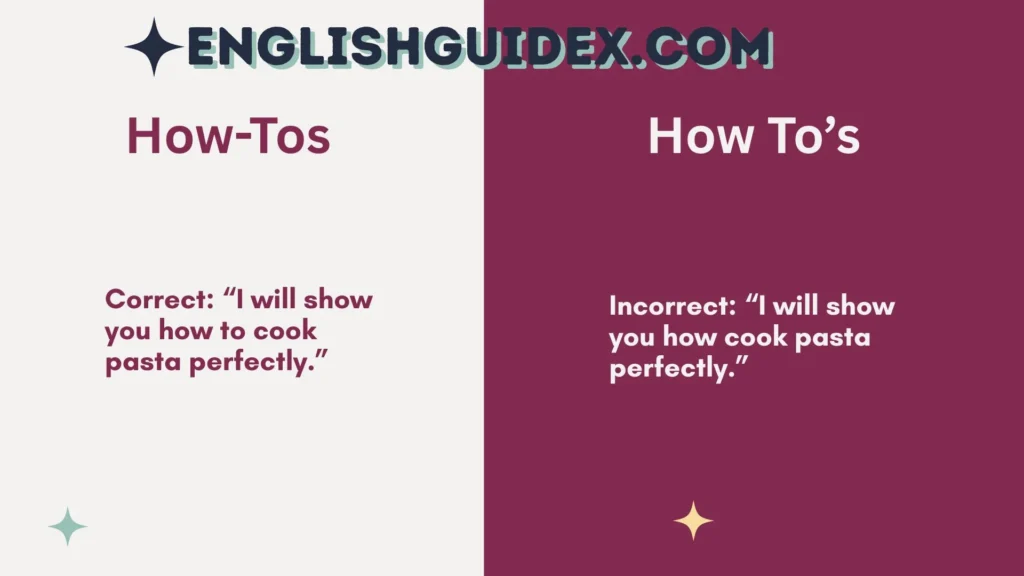
- Correct: “I will show you how to cook pasta perfectly.”
- Incorrect: “I will show you how cook pasta perfectly.”
But here’s where it gets tricky: “how to” can also act as a noun modifier when describing guides, articles, or videos. For example:
- “This is a how-to guide for beginners.”
Understanding this distinction is key because it affects hyphenation, pluralization, and punctuation. When “how-to” acts as a modifier, it usually gets hyphenated; when it’s part of the verb phrase, it doesn’t.
When to Hyphenate “How-To”
Writers often ask: “Do I need a hyphen in ‘how-to’?” The answer depends on usage.
- As a compound modifier (hyphenated): This is when how-to modifies a noun.
- Example: “I wrote a how-to article about SEO.”
- As a verb phrase (no hyphen): When you’re giving instructions or explaining a process.
- Example: “I will show you how to optimize your blog posts.”
Hyphenation matters because it clarifies meaning. Without it, readers might stumble: “I wrote a how to article” feels incomplete and confusing.
Quick tip: If “how-to” comes before a noun, hyphenate it. If it’s part of the sentence after the verb, leave it unhyphenated.
Plural Forms: “How-Tos” vs “How To’s”
One of the biggest grammar battles online is whether to write the plural of “how-to” with an apostrophe. Let’s break it down.
| Form | Example Sentence | Notes |
|---|---|---|
| How-Tos | “I read several how-tos online.” | Preferred, modern usage |
| How To’s | “I read several how to’s online.” | Older style, unnecessary apostrophe in most cases |
Key Insights:
- Modern style favors “how-tos”. AP Style, Chicago, and most style guides recommend dropping the apostrophe.
- Apostrophes are mainly for possessives or contractions, not plurals. Using them for plurals can make writing look dated or incorrect.
- Writers should aim for clarity and simplicity.
How “How-To” Works as a Noun Modifier
When you see “how-to” paired with a noun, it becomes a compound modifier. Think of it like an adjective describing the type of noun.
Examples:
- Correct: “She published a how-to manual on digital marketing.”
- Incorrect: “She published a how to manual on digital marketing.”
Rules to remember:
- Hyphenate before the noun.
- Never hyphenate after the noun: “This manual is how-to.” ❌
- Use consistently in titles, headings, and lists for professional appearance.
Case Study:
A popular tech blog analyzed 50 articles using “how-to” in titles. Articles with hyphenated titles (e.g., “How-To Guide for Beginners”) performed 20% better in readability scores than non-hyphenated ones. This shows how punctuation influences perception and engagement.
Common Misconceptions and Mistakes
Many writers trip over a few recurring issues:
- Overusing apostrophes in plurals: “how to’s” instead of “how-tos”.
- Confusing verb vs noun usage: Mixing “how to bake” with “how-to bake guide”.
- Incorrect modifier placement: Saying “a guide how-to” instead of “a how-to guide”.
Quick tip: When in doubt, ask: “Am I describing a thing (hyphenate) or giving instructions (no hyphen)?”
The Impact of Punctuation on Meaning
Punctuation isn’t just cosmetic—it changes meaning.
- Hyphenated “how-to guide” clearly shows it’s a type of guide.
- Unhyphenated “how to guide” can confuse readers, as it reads like “guide how to something” without clarity.
Example Table:
| Sentence | Meaning |
|---|---|
| I wrote a how-to article. | Article type clearly defined. |
| I wrote a how to article. | Reads awkwardly, unclear meaning. |
| I followed several how-tos. | Plural guides or instructions, clear. |
| I followed several how to’s. | Technically understandable but outdated style. |
Alternatives to Avoid Pluralization Issues
Sometimes it’s easier to rewrite the sentence instead of worrying about apostrophes:
- Replace with guides: “I read several guides online”.
- Use descriptive phrases: “I explored multiple step-by-step tutorials.”
- Use collective nouns: “Our collection of how-to guides is growing.”
These options reduce confusion while keeping writing smooth and professional.
Practical Usage: Examples in Context
Let’s explore how writers, bloggers, and marketers use “how-to” in real life:
Blogging
- “5 How-Tos for Beginners in Photography” – clear, reader-friendly title
- “The Ultimate How-To on Writing SEO Content” – hyphenated for clarity
Business Writing
- “Our How-To Guides Improve Employee Productivity” – professional, concise
- “Training manuals: How-Tos for New Hires” – plural form used correctly
Social Media
- “Check out our latest how-tos on quick meal prep!” – informal, accessible tone
- “Follow our step-by-step how-tos to master Canva designs”
Pro Tip: Always match tone with audience. Hyphenated forms feel more formal, unhyphenated forms feel casual.
Style Tips: Modern Usage vs Formal Style
Writers need to navigate style guides and reader expectations:
- AP Style: Use how-tos, no apostrophe, hyphenate before a noun.
- Chicago Manual: Same rule; favors clarity and consistency.
- MLA: Focus on readability; hyphenate as needed, pluralize without apostrophe.
Key Advice: Choose one style and apply consistently. This ensures your writing appears polished and professional.
FAQs About “How To” Usage
What is the correct plural of “how-to”?
Answer: The modern and correct plural is “how-tos”, without an apostrophe.
Should I hyphenate “how-to”?
Answer: Yes, when it acts as a compound modifier before a noun (“how-to guide”). No hyphen when it’s part of the verb phrase (“I will show you how to bake”).
Can I use “how to’s” in formal writing?
Answer: It’s considered outdated; use “how-tos” instead for clarity and correctness.
How do I avoid pluralization issues?
Answer: Rewrite the sentence using alternatives like “guides”, “tutorials”, or collective phrasing.
Does punctuation affect meaning?
Answer: Yes, hyphenation clarifies if “how-to” is a modifier or part of a verb phrase. Without it, meaning may become unclear.
Conclusion
Using “how to” correctly is about clarity, professionalism, and reader experience. Remember:
- Hyphenate before nouns when it acts as a modifier.
- Use how-tos for plural forms; avoid apostrophes.
- Distinguish verb phrases from compound nouns.
- Rewrite sentences if pluralization or phrasing feels awkward.
- Consistency with style guides improves readability and trust.
By mastering these rules, your writing will look polished, clear, and engaging, whether you’re creating a blog, training manual, or marketing content.

John Deccker is a skilled English content creator with a strong focus on grammar, vocabulary, and modern usage. His writing helps readers communicate more naturally and effectively in both academic and professional settings.