Last updated on December 2nd, 2025 at 04:37 pm
Learning to express yourself clearly in English means knowing how to say the same thing in different ways. One common phrase that often pops up in conversation and writing is “for the first time.”
You’ve probably used it hundreds of times — when talking about experiences, achievements, or discoveries. But repeating the same phrase can make your writing or speech sound dull or repetitive. That’s where alternatives come in.
In this guide, you’ll explore 20+ natural and effective ways to say “for the first time”, with examples and explanations for both formal and informal situations. These alternatives will help you sound more fluent, confident, and expressive — whether you’re writing an email, story, report, or just chatting with friends.
🧠 What Does “For the First Time” Mean?
The phrase “for the first time” means something is happening that has never happened before.
It refers to an event, action, or experience that’s new or original in someone’s life or history. Grammatically, it usually appears at the end of a sentence but can also start one for emphasis.
Example:
- I visited Paris for the first time last year.
- For the first time, she felt truly happy.
💬 When to Use “For the First Time”
You can use “for the first time” in many contexts:
- Formal: reports, essays, news writing, research papers
Example: Scientists observed this behavior for the first time in 2024. - Informal: daily speech, storytelling, blogs
Example: I tried sushi for the first time yesterday! - Written English: emails, articles, social media posts
Example: For the first time in months, the city saw clear skies. - Spoken English: conversations, interviews, presentations
Example: For the first time, I felt nervous before a speech.
🤔 Is It Professional or Polite to Say “For the First Time”?
Yes — “for the first time” is polite, professional, and neutral.
It’s perfectly fine for business, academic, or casual use. However, in formal or creative writing, it’s better to vary your vocabulary for a more polished and engaging tone.
For instance:
- Instead of saying “The team met for the first time,”
You could say “The team had their initial meeting.”
That small change makes your sentence sound more refined and fluent.
⚖️ Pros and Cons of Using “For the First Time”
✅ Pros:
- Clear and easy to understand
- Works in all contexts
- Grammatically simple
❌ Cons:
- Overused in writing and speech
- Sounds repetitive in long texts
- Lacks emotional depth or creativity
🪄 20+ Other Ways to Say “For the First Time” (With Examples)
Below are powerful alternatives to “for the first time,” explained simply with examples and usage tips.
1. At First
Meaning: At the beginning of an experience or event.
Explanation: Often shows the start of something new or uncertain.
Example: At first, I didn’t like coffee, but now I love it.
Best Use: Informal, storytelling.
Worst Use: Academic writing.
Tone: Neutral / Conversational.
2. Initially
Meaning: In the beginning; before changes occurred.
Explanation: Common in formal or business writing.
Example: Initially, the project faced many challenges.
Best Use: Reports, research, business.
Worst Use: Casual chats.
Tone: Formal / Professional.
3. For the Very First Time
Meaning: Emphasizes that it’s truly the first occasion.
Explanation: Adds excitement or importance.
Example: She performed on stage for the very first time.
Best Use: Storytelling, emotional writing.
Worst Use: Formal business writing.
Tone: Emphatic / Expressive.
4. At the Beginning
Meaning: Refers to the starting point of an action or event.
Explanation: Highlights when something starts, not necessarily new.
Example: At the beginning, I was nervous about my job.
Best Use: Neutral contexts, explanations.
Worst Use: When describing unique experiences.
Tone: Neutral / Informal.
5. In the Beginning
Meaning: Describes how something started in a general or broad sense.
Explanation: Often used for storytelling or reflections.
Example: In the beginning, our team was small but determined.
Best Use: Storytelling, reflective writing.
Worst Use: Technical writing.
Tone: Warm / Narrative.
6. For the First Occasion
Meaning: The first happening of an event.
Explanation: Slightly formal; sounds academic.
Example: This phenomenon was recorded for the first occasion in 2020.
Best Use: Research, academic writing.
Worst Use: Casual speech.
Tone: Formal / Neutral.
7. On My First Try
Meaning: The first attempt or effort.
Explanation: Adds personal or casual tone.
Example: I passed the test on my first try.
Best Use: Informal, personal writing.
Worst Use: Academic writing.
Tone: Friendly / Casual.
8. At Long Last
Meaning: After waiting or trying for a long time.
Explanation: Adds a tone of relief or excitement.
Example: At long last, I saw the ocean with my own eyes.
Best Use: Storytelling, emotional writing.
Worst Use: Corporate writing.
Tone: Emphatic / Warm.
9. To Begin With
Meaning: Refers to the start of a process or story.
Explanation: Common in explanations or arguments.
Example: To begin with, I didn’t know anyone at the office.
Best Use: Essays, speeches, storytelling.
Worst Use: Strict academic contexts.
Tone: Neutral / Conversational.
10. For Once
Meaning: Refers to something happening for the first or rare time.
Explanation: Often shows surprise or humor.
Example: For once, he arrived on time!
Best Use: Informal, humorous contexts.
Worst Use: Professional reports.
Tone: Friendly / Playful.
11. From the Start
Meaning: Since the beginning.
Explanation: Shows continuity from the first moment.
Example: He supported me from the start.
Best Use: Neutral, narrative writing.
Worst Use: Strictly formal papers.
Tone: Warm / Neutral.
12. From Day One
Meaning: Since the very beginning; from the first moment.
Explanation: Popular in business and informal speech.
Example: They’ve been committed to excellence from day one.
Best Use: Business talks, motivational writing.
Worst Use: Academic essays.
Tone: Motivational / Casual.
13. At the Outset
Meaning: At the very start of something.
Explanation: Common in formal writing or speeches.
Example: At the outset, we knew this project would be challenging.
Best Use: Formal reports, professional writing.
Worst Use: Casual speech.
Tone: Formal / Neutral.
14. Inaugurally
Meaning: During the first or opening event.
Explanation: Rare but powerful in formal or ceremonial writing.
Example: He delivered his address inaugurally as president.
Best Use: Ceremonial, historical contexts.
Worst Use: Everyday conversation.
Tone: Highly Formal.
15. For the Debut
Meaning: Refers to a person’s first public appearance or action.
Explanation: Often used for artists or performers.
Example: She wore a stunning dress for her film debut.
Best Use: Entertainment, media writing.
Worst Use: Business contexts.
Tone: Stylish / Neutral.
16. For the Initial Time
Meaning: The first instance; similar to “for the first time.”
Explanation: Slightly formal synonym.
Example: The feature was tested for the initial time in March.
Best Use: Technical or business writing.
Worst Use: Daily conversation.
Tone: Formal / Professional.
17. Newly
Meaning: Recently or just now.
Explanation: Focuses on recent occurrence rather than first.
Example: He’s newly married and very happy.
Best Use: Neutral writing, news reports.
Worst Use: Historical or repeated actions.
Tone: Neutral / Informative.
18. At Its Inception
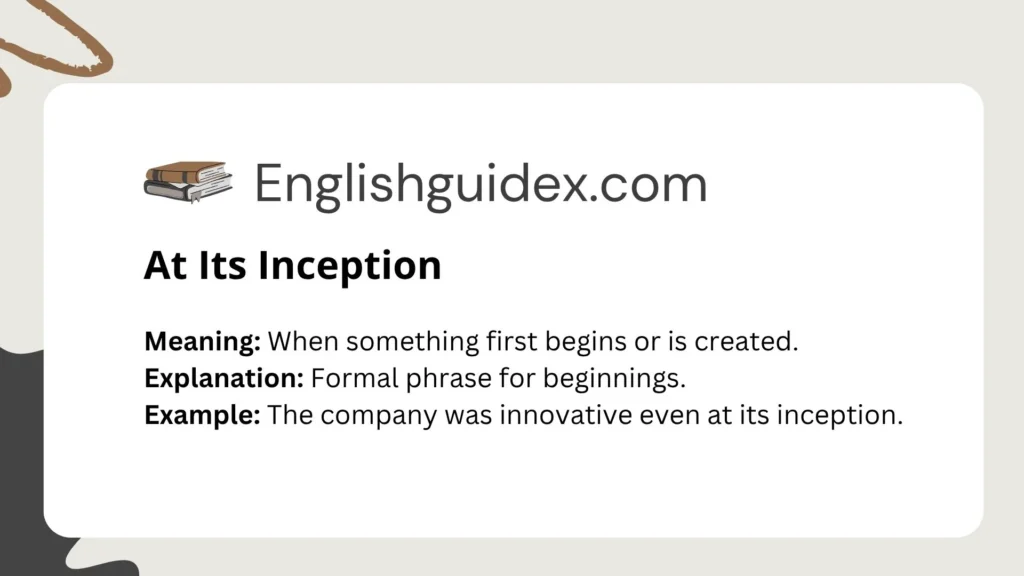
Meaning: When something first begins or is created.
Explanation: Formal phrase for beginnings.
Example: The company was innovative even at its inception.
Best Use: Business, academic, historical contexts.
Worst Use: Personal stories.
Tone: Formal / Analytical.
19. For the Maiden Time
Meaning: The first occurrence; old-fashioned version.
Explanation: Used in literary or historical writing.
Example: The ship set sail for the maiden time in 1912.
Best Use: Literary or poetic contexts.
Worst Use: Modern conversation.
Tone: Old-fashioned / Formal.
20. At the Onset
Meaning: At the early stage or start of something.
Explanation: Often used for processes or conditions.
Example: At the onset of winter, temperatures dropped quickly.
Best Use: Formal, descriptive writing.
Worst Use: Emotional storytelling.
Tone: Neutral / Professional.
21. Upon Starting
Meaning: Right after beginning something.
Explanation: Common in instructions or reflective writing.
Example: Upon starting the course, I realized how much I had to learn.
Best Use: Academic, reflective writing.
Worst Use: Informal speech.
Tone: Formal / Neutral.
📊 Comparison Table of Common Alternatives
| Phrase | Tone | Best Use | Example |
|---|---|---|---|
| Initially | Formal | Reports, research | Initially, sales were low. |
| From Day One | Casual | Motivational speech | She believed in her idea from day one. |
| At the Outset | Formal | Business writing | At the outset, the plan looked solid. |
| For Once | Friendly | Conversation | For once, I arrived early! |
| In the Beginning | Narrative | Storytelling | In the beginning, it was just a dream. |
| At Long Last | Emphatic | Emotional writing | At long last, we reached the summit. |
❓FAQs About “For the First Time”
1. Is “for the first time” too basic for formal writing?
Not necessarily. It’s clear and correct, but using formal alternatives like “initially” or “at the outset” can sound more polished.
2. Can I use “for the first time” at the beginning of a sentence?
Yes! “For the first time, I felt proud of my work.” It’s grammatically correct and adds emphasis.
3. What’s the most professional alternative?
Words like “initially,” “at the outset,” and “at its inception” are ideal for formal or corporate writing.
4. What’s the most casual alternative?
“From day one” and “on my first try” sound friendly and relaxed.
5. What’s a poetic or emotional way to say it?
“At long last” or “for the very first time” carry strong emotional weight.
🏁 Conclusion
The phrase “for the first time” is simple, clear, and widely used — but learning its alternatives helps you communicate with more style, confidence, and depth.
By mastering these expressions, you can adjust your tone for any situation — from professional reports to heartfelt stories.
So next time you write or speak, try one of these fresh phrases to make your English sound more natural and expressive.

David Jonson is an experienced English language writer who specializes in clear, practical, and learner-friendly content. He helps students and professionals improve their communication skills with confidence.