Last updated on January 29th, 2026 at 08:29 am
The phrase “great asset to the team” is a classic compliment used to appreciate someone’s value, skills, or contribution at work. You’ll often hear it in offices, meetings, or performance reviews. It means the person makes the team stronger and more successful.
But saying the same phrase over and over can sound repetitive or insincere. Using alternative expressions helps you sound more natural, thoughtful, and fluent — especially in professional communication. Whether you’re writing an email, giving feedback, or speaking in a meeting, knowing other ways to say “great asset to the team” will help you express appreciation more effectively.
In this article, you’ll learn what the phrase means, when to use it, its pros and cons, and 22+ alternative ways to say it — with meanings, examples, and usage notes.
💬 What Does “Great Asset to the Team” Mean?
The phrase “great asset to the team” means that someone adds value, helps the team succeed, or contributes positively to group goals.
- Grammar:
- Asset is a noun meaning something valuable or useful.
- To the team shows who benefits from that value.
- Example: Sarah is a great asset to the team because of her leadership skills.
In short, it’s a polite and professional way to say someone is valuable, helpful, and essential in a group or company.
🕐 When to Use “Great Asset to the Team”
You can use this phrase in both spoken and written English. It’s common in:
- Performance reviews – “You’ve been a great asset to the marketing team this year.”
- Job interviews – “I believe I’d be a great asset to your company.”
- Emails – “John has been a great asset to the project.”
- Team meetings – “Lisa’s ideas have been a great asset to our progress.”
It fits formal and semi-formal situations, especially in business, corporate, or academic settings.
🗣️ Is It Professional or Polite to Say “Great Asset to the Team”?
Yes — it’s both professional and polite. The phrase shows respect and recognition. However, it can sound generic or overused if repeated too often. Using more specific language can make your message stronger and more personal.
For instance:
- Instead of “Tom is a great asset to the team,” you could say,
“Tom’s creativity has greatly improved our marketing strategy.”
This version sounds more genuine and shows exactly how Tom adds value.
⚖️ Pros and Cons of Using “Great Asset to the Team”
Pros:
- ✅ Professional and polite
- ✅ Easy to understand
- ✅ Suitable for any work environment
- ✅ Positive and respectful tone
Cons:
- ❌ Overused and vague
- ❌ Doesn’t specify the person’s actual contribution
- ❌ Can sound impersonal if used too often
🧠 22+ Other Ways to Say “Great Asset to the Team” (With Examples)
Below are 22 alternative expressions you can use depending on formality, tone, and context.
1. Valuable Member of the Team
Meaning: Someone whose contribution makes the team stronger.
Explanation: A simple, professional phrase for workplace settings.
Example Sentence: Emma is a valuable member of the team and always delivers quality work.
Best Use: Formal / Business
Worst Use: Casual talk with friends
Tone: Professional, Appreciative
2. Key Contributor
Meaning: A person who plays an important part in success.
Explanation: Highlights someone’s active involvement in results.
Example Sentence: Mark was a key contributor to our product launch.
Best Use: Business, formal presentations
Worst Use: Informal social situations
Tone: Formal, Respectful
3. Core Team Player
Meaning: Someone essential to the main team.
Explanation: Suggests reliability and teamwork.
Example Sentence: Sophia is a core team player who keeps everyone motivated.
Best Use: Business / Team settings
Worst Use: Solo work contexts
Tone: Neutral, Professional
4. Integral Part of the Team
Meaning: A person without whom the team wouldn’t function well.
Explanation: Stronger than “asset,” emphasizing importance.
Example Sentence: David is an integral part of the team; his insight is unmatched.
Best Use: Formal / Written communication
Worst Use: Casual conversation
Tone: Formal, Appreciative
5. Real Team Player
Meaning: Someone who cooperates well and supports others.
Explanation: Common in both workplaces and sports teams.
Example Sentence: Nina’s a real team player who puts others first.
Best Use: Informal or semi-formal praise
Worst Use: Very formal reports
Tone: Friendly, Positive
6. Invaluable Asset
Meaning: Extremely valuable; can’t be replaced.
Explanation: Adds emotional weight to appreciation.
Example Sentence: Your attention to detail makes you an invaluable asset.
Best Use: Performance reviews / Professional emails
Worst Use: Informal chit-chat
Tone: Formal, Strongly Appreciative
7. Driving Force
Meaning: The main person motivating or leading progress.
Explanation: Suggests leadership and initiative.
Example Sentence: James has been the driving force behind the new campaign.
Best Use: Business / Motivational talks
Worst Use: Small casual chats
Tone: Emphatic, Professional
8. Strong Support to the Team
Meaning: Someone who provides reliable help or backup.
Explanation: Recognizes effort rather than leadership.
Example Sentence: Ella’s been a strong support to the design team this quarter.
Best Use: Business, internal communication
Worst Use: Informal speech
Tone: Neutral, Appreciative
9. Irreplaceable Member
Meaning: Someone whose role is vital and unique.
Explanation: Expresses high appreciation and trust.
Example Sentence: You’re an irreplaceable member of our project group.
Best Use: Formal praise or recognition notes
Worst Use: Overly casual messages
Tone: Formal, Emphatic
10. Valued Colleague
Meaning: A respected and appreciated coworker.
Explanation: Common in business English, especially in emails.
Example Sentence: John is a valued colleague who always helps others succeed.
Best Use: Business / Corporate
Worst Use: Friendly banter
Tone: Professional, Respectful
11. Major Contributor
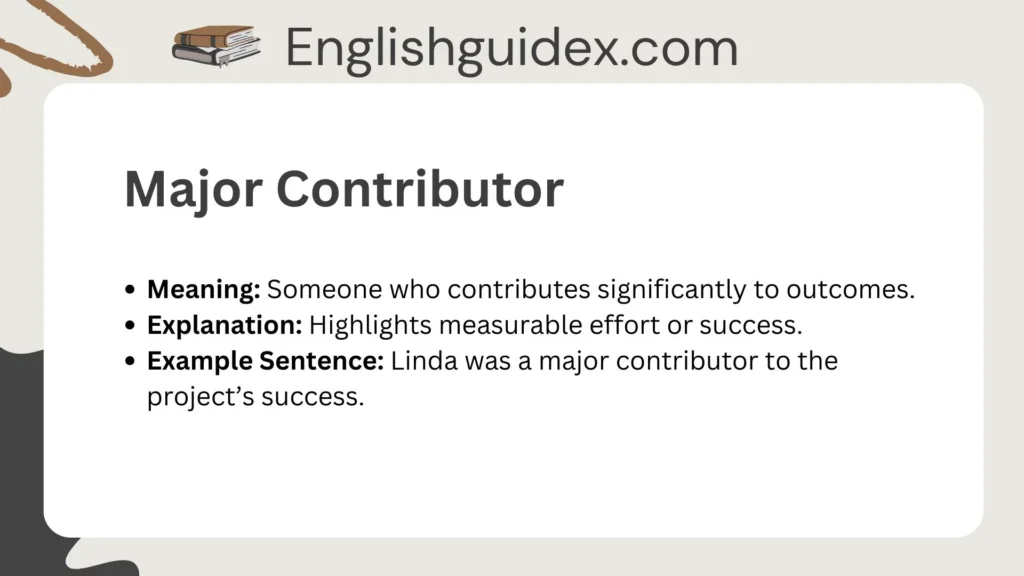
Meaning: Someone who contributes significantly to outcomes.
Explanation: Highlights measurable effort or success.
Example Sentence: Linda was a major contributor to the project’s success.
Best Use: Reports, evaluations
Worst Use: Casual situations
Tone: Formal, Objective
12. Team’s Backbone
Meaning: The person who supports the entire team’s efforts.
Explanation: Figurative expression emphasizing reliability.
Example Sentence: He’s the team’s backbone — always dependable.
Best Use: Motivational or team appreciation talks
Worst Use: Very formal writing
Tone: Friendly, Supportive
13. Pillar of the Team
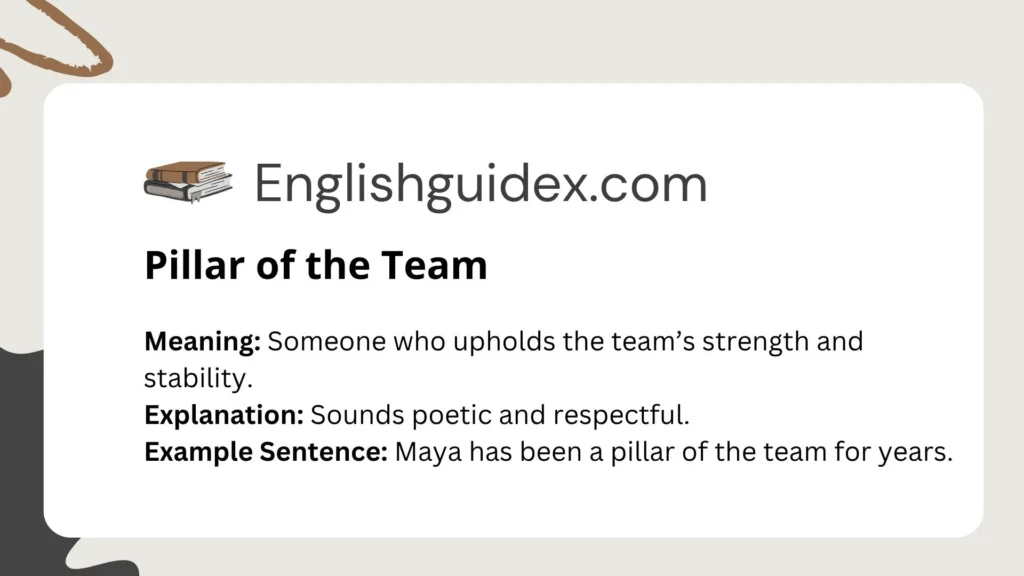
Meaning: Someone who upholds the team’s strength and stability.
Explanation: Sounds poetic and respectful.
Example Sentence: Maya has been a pillar of the team for years.
Best Use: Speeches, recognitions
Worst Use: Casual text messages
Tone: Formal, Admiring
14. Top Performer
Meaning: The best or one of the best in the team.
Explanation: Focuses on results and performance.
Example Sentence: Ali is one of our top performers this quarter.
Best Use: Formal reviews, HR reports
Worst Use: Group chats
Tone: Formal, Positive
15. Team’s Strength
Meaning: A person whose skills make the team stronger.
Explanation: Great for informal praise.
Example Sentence: You’re the team’s strength, always ready to help.
Best Use: Friendly or casual tone
Worst Use: Strictly formal reports
Tone: Friendly, Encouraging
16. Trusted Team Member
Meaning: Someone reliable and respected.
Explanation: Emphasizes honesty and dependability.
Example Sentence: Maria is a trusted team member who always delivers.
Best Use: Professional emails, references
Worst Use: Informal conversations
Tone: Formal, Neutral
17. Essential Part of the Team
Meaning: Necessary for team’s functioning.
Explanation: Similar to “integral,” but slightly softer.
Example Sentence: You’ve become an essential part of the team in just months.
Best Use: Work feedback
Worst Use: Non-professional talk
Tone: Neutral, Appreciative
18. Key Team Player
Meaning: A person crucial to teamwork and collaboration.
Explanation: Popular phrase for group success.
Example Sentence: Jake has proven to be a key team player this season.
Best Use: Sports, workplace
Worst Use: Formal documents
Tone: Friendly, Motivational
19. Significant Contributor
Meaning: Someone whose efforts made a noticeable impact.
Explanation: Balanced and neutral — fits many tones.
Example Sentence: Hannah was a significant contributor to the company’s growth.
Best Use: Business reports
Worst Use: Casual chats
Tone: Formal, Neutral
20. Positive Influence
Meaning: A person who boosts morale and teamwork.
Explanation: Emphasizes emotional contribution.
Example Sentence: Tom is a positive influence on the entire group.
Best Use: Team recognition, HR messages
Worst Use: Performance-only settings
Tone: Friendly, Motivational
21. Team’s Anchor
Meaning: Someone who keeps the team steady and focused.
Explanation: Figurative phrase for reliability.
Example Sentence: She’s the team’s anchor during stressful projects.
Best Use: Speeches / Informal praise
Worst Use: Formal documents
Tone: Friendly, Supportive
22. Reliable Teammate
Meaning: Someone dependable and consistent.
Explanation: A simple phrase suitable for everyday use.
Example Sentence: Jake is a reliable teammate who never misses a deadline.
Best Use: Informal or semi-formal
Worst Use: High-level corporate writing
Tone: Neutral, Appreciative
23. Team’s Secret Weapon
Meaning: Someone who adds hidden or unique value.
Explanation: Fun and creative way to appreciate someone.
Example Sentence: Olivia’s research skills make her the team’s secret weapon.
Best Use: Informal / Motivational tone
Worst Use: Serious or official reports
Tone: Playful, Positive
📊 Comparison Table: Top Alternatives
| Phrase | Tone | Best Use | Example |
|---|---|---|---|
| Valuable Member of the Team | Professional | Business | Emma is a valuable member of the team. |
| Integral Part of the Team | Formal | Written communication | David is an integral part of the team. |
| Real Team Player | Friendly | Informal praise | Nina’s a real team player. |
| Driving Force | Emphatic | Motivational | James has been the driving force behind success. |
| Pillar of the Team | Formal | Recognition speech | Maya is a pillar of the team. |
| Reliable Teammate | Neutral | Daily communication | Jake is a reliable teammate. |
❓ FAQs
1. Can I use “great asset to the team” in an interview?
Yes! Say it when explaining your strengths — for example: “I believe I’d be a great asset to your company due to my teamwork and leadership.”
2. Is it okay to use this phrase in emails?
Absolutely. It fits professional messages, but try to personalize it for better impact.
3. What’s the most formal alternative?
“Integral part of the team” or “invaluable asset” sound more formal.
4. What’s the most casual alternative?
“Real team player” or “team’s secret weapon” are best for informal praise.
5. How can I make it sound more natural?
Add specific details — for example: “Your design ideas have been a real asset to the project.”
🏁 Conclusion
The phrase “great asset to the team” is polite and professional, but overusing it can make your message sound dull. Learning alternative expressions helps you show appreciation in a more personal, fluent, and powerful way.
Whether you say “key contributor,” “pillar of the team,” or “real team player,” varying your language shows emotional intelligence and strong communication skills.
So next time you praise a colleague, choose a phrase that truly fits their impact — and make your compliment stand out!

David Jonson is an experienced English language writer who specializes in clear, practical, and learner-friendly content. He helps students and professionals improve their communication skills with confidence.