Last updated on December 2nd, 2025 at 04:40 pm
When someone shares good news, you might say “happy to hear that.” It means you’re glad about what they told you—and you want to show your positive reaction.
But choosing the same phrase each time can make your response feel a bit flat or repetitive.
Using alternatives—synonyms, variations, more formal or more informal expressions—can help you sound more natural and confident in English.
Whether you’re chatting with friends, writing a business email, or talking in a professional meeting, word choice affects tone, impression, and clarity.
In this article, you’ll learn what “happy to hear that” means, when it’s appropriate, how polite it is in different settings, its pros and cons—and more than twenty alternative phrases with definitions, explanations, examples, and usage contexts.
This will give you tools to express joy, support, or relief in a variety of situations and styles.
What Does “Happy to Hear That” Mean?
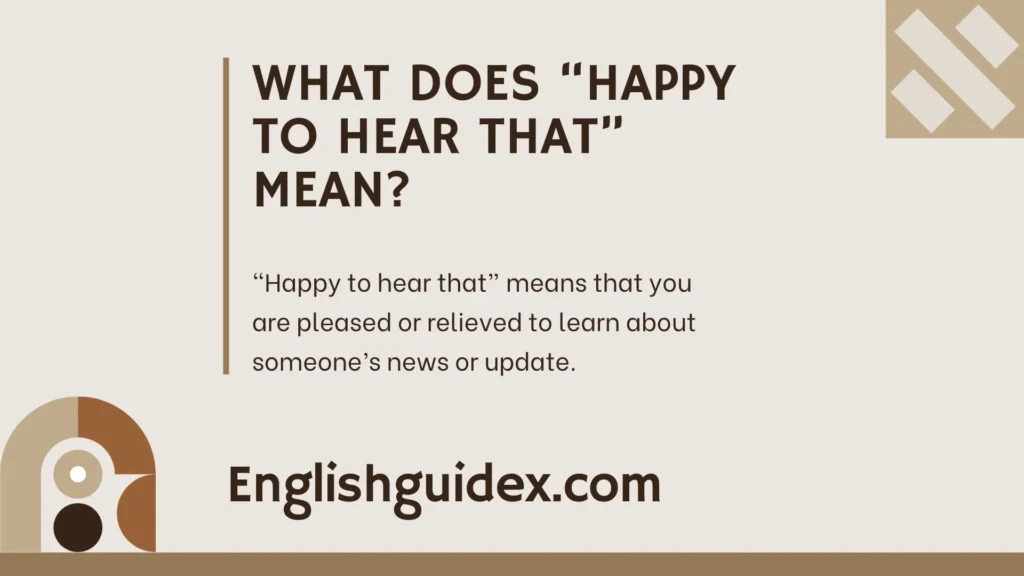
“Happy to hear that” means that you are pleased or relieved to learn about someone’s news or update. Grammatically, it is a statement of emotion (happy) applied to the action of hearing the information.
- “I’m happy” = expressing your emotional state
- “to hear that” = the reason / trigger of the emotion (what you heard)
The phrase is typically used in response to positive information someone has given you.
When to Use “Happy to Hear That”
You can use this phrase in many types of communication:
- Formal business email: A colleague writes that a project is progressing. You might respond: “Happy to hear that the project is on schedule.”
- Informal chat: A friend says they got tickets to a concert. You respond: “Happy to hear that—have fun!”
- Written message: Text, email, messaging app.
- Spoken conversation: In a meeting, call, or face-to-face.
It works in many situations—but it’s not always the best fit if you need a higher or lower level of formality, or want to vary tone.
Is It Professional / Polite to Say “Happy to Hear That”?
Yes—it is generally professional and polite. It conveys warmth and support. For example, one source notes that phrases like “I’m glad to hear that” are “formal enough” in professional settings. English Language & Usage Stack Exchange+2English Language Learners Stack Exchange+2
However, because it is somewhat casual in tone (especially with “happy” instead of “pleased” or “delighted”), there may be times in very formal writing when you’d prefer a slightly more formal variant (“I’m pleased to hear that”). Also, if overused it can sound generic. Rontar+1
Pros and Cons of Using “Happy to Hear That”
Pros:
- Simple and clear.
- Positive and warm.
- Fits both informal and many semi-formal situations.
- Easy for English learners to remember and use.
Cons:
- Slightly informal for very formal or corporate communication.
- Can sound repetitive or generic if used all the time.
- Doesn’t convey strong emotion or nuance (just neutral “happy”).
- May not reflect strong enthusiasm when it’s warranted.
Alternative Phrases
Below are 20 alternative ways to say “happy to hear that.” For each you’ll find: the phrase, meaning, explanation, example sentence, best use context, worst use context, and tone.
- Phrase:That’s great news
- Meaning: This is very positive information.
- Explanation: A direct acknowledgment of good news, slightly more enthusiastic.
- Example: “You won the contract? That’s great news!”
- Best Use: Informal / business casual
- Worst Use: Very formal official report (“That’s great news” may sound too conversational)
- Tone: Friendly
- Phrase:I’m glad to hear that
- Meaning: I feel happy about what you just told me.
- Explanation: Very close in meaning to “happy to hear that,” slightly more formal.
- Example: “I’m glad to hear that the meeting went smoothly.”
- Best Use: Business email, spoken conversation
- Worst Use: Extremely informal texting (“Glad to hear that” sounds fine though)
- Tone: Neutral-friendly
- Phrase:That’s good to hear
- Meaning: It is good (positive) that you told me this.
- Explanation: Slightly more neutral than “great news”—good but not overly enthusiastic.
- Example: “You completed the internship? That’s good to hear.”
- Best Use: Professional or semi-formal
- Worst Use: Very informal slangy contexts where you want excitement (“That’s good to hear” may sound understated)
- Tone: Polite
- Phrase:I’m delighted to hear that
- Meaning: I’m very pleased to learn that.
- Explanation: Higher level of formality and stronger positive emotion.
- Example: “I’m delighted to hear that your proposal was approved.”
- Best Use: Formal business email, official announcement
- Worst Use: Informal chat with close friends (“delighted” might sound stiff)
- Tone: Formal
- Phrase:That’s wonderful to hear
- Meaning: It is wonderful (very good) that you’ve told me this.
- Explanation: Warm, positive, slightly elevated tone.
- Example: “Your team hit the milestone ahead of schedule? That’s wonderful to hear!”
- Best Use: Mixed formal/informal (friendly but respectful)
- Worst Use: Ultra-formal legal document (“That’s wonderful to hear” may sound too conversational)
- Tone: Friendly-formal
- Phrase:I’m so happy for you
- Meaning: I’m very pleased on your behalf.
- Explanation: Emphasises your happiness for the other person rather than the news itself.
- Example: “You’re getting married? I’m so happy for you!”
- Best Use: Personal/informal, also semi-formal personal message
- Worst Use: Strict business communication where you don’t share personal closeness (“I’m so happy for you” might sound too personal)
- Tone: Friendly/emphatic
- Phrase:What fantastic news!
- Meaning: This is very, very good news!
- Explanation: Exclamatory, emphasises the significance of the news.
- Example: “The project reached record sales? What fantastic news!”
- Best Use: Informal or business semi-formal when really good news
- Worst Use: Time of cautious tone (“What fantastic news!” might sound over-the-top when news is modest)
- Tone: Enthusiastic
- Phrase:I’m thrilled for you
- Meaning: I’m very excited and happy on your behalf.
- Explanation: Expresses strong positive emotion focused on the person’s benefit.
- Example: “Your promotion came through? I’m thrilled for you!”
- Best Use: Informal personal, semi-formal friendly business
- Worst Use: Formal official report to a client you don’t know personally (“I’m thrilled for you” might sound too familiar)
- Tone: Emphatic
- Phrase:Such a relief to hear
- Meaning: I feel relieved (less worry) now that you’ve told me this.
- Explanation: Good when news resolves a concern or worry rather than just being “good.”
- Example: “You’re safe after the storm? Such a relief to hear.”
- Best Use: Informal or semi-formal personal/business after a stress-related update
- Worst Use: Routine good news where no relief is involved (“Such a relief” may be too strong)
- Tone: Warm/relieved
- Phrase:You’ve made my day
- Meaning: What you told me made me very happy.
- Explanation: Indicates the news impacted you emotionally in a positive way.
- Example: “You remembered my birthday? You’ve made my day!”
- Best Use: Personal/informal
- Worst Use: Formal business email (“You’ve made my day” is too casual)
- Tone: Friendly/enthusiastic
- Phrase:I’m overjoyed to learn that
- Meaning: I feel extreme happiness at learning this.
- Explanation: Strong, formal-ish expression of joy.
- Example: “I’m overjoyed to learn that the grant application was successful.”
- Best Use: Formal announcement or when really big news
- Worst Use: Casual chat about small update (“I’m overjoyed…” may feel too grand)
- Tone: Formal/emphatic
- Phrase:That’s excellent
- Meaning: That is very good / excellent news.
- Explanation: Short, clear, professional.
- Example: “You’ve cleared all audits? That’s excellent.”
- Best Use: Business/professional
- Worst Use: Very informal friendly chat (“That’s excellent” may sound formal)
- Tone: Neutral-professional
- Phrase:I’m pleased to hear that
- Meaning: I feel pleased about what you told me.
- Explanation: A bit more formal than “happy” and suits business contexts.
- Example: “I’m pleased to hear that the client accepted our proposal.”
- Best Use: Formal business email, report
- Worst Use: Chatty message to close friend (“I’m pleased” may feel distant)
- Tone: Formal
- Phrase:That’s wonderful news
- Meaning: The news is wonderful.
- Explanation: Slightly more emphatic than “that’s great news.”
- Example: “You won the competition? That’s wonderful news!”
- Best Use: Semi-formal or informal when you’re genuinely pleased
- Worst Use: Overly formal contexts (“That’s wonderful news” may still be fine though)
- Tone: Friendly
- Phrase:I couldn’t be happier for you
- Meaning: I’m as happy as I possibly can be for you.
- Explanation: Expresses maximum personal happiness for someone’s benefit.
- Example: “You and your partner are moving abroad? I couldn’t be happier for you!”
- Best Use: Informal/personal
- Worst Use: Very formal business communication (“I couldn’t be happier for you” may sound too personal)
- Tone: Emphatic/friendly
- Phrase:What a joyful update
- Meaning: The update brings joy.
- Explanation: Slightly more literary, emphasises the happy nature of the information.
- Example: “The volunteer programme exceeded its target? What a joyful update!”
- Best Use: Semi-formal friendly business or personal message
- Worst Use: Casual texting (“What a joyful update” might sound formal)
- Tone: Warm
- Phrase:That’s amazing to hear
- Meaning: It is amazing that I heard this.
- Explanation: Emphasises your sense of surprise or admiration at the news.
- Example: “Your new book is published? That’s amazing to hear!”
- Best Use: Informal or friendly business
- Worst Use: Cold formal email where you want very neutral tone (“That’s amazing to hear” may feel too informal)
- Tone: Enthusiastic
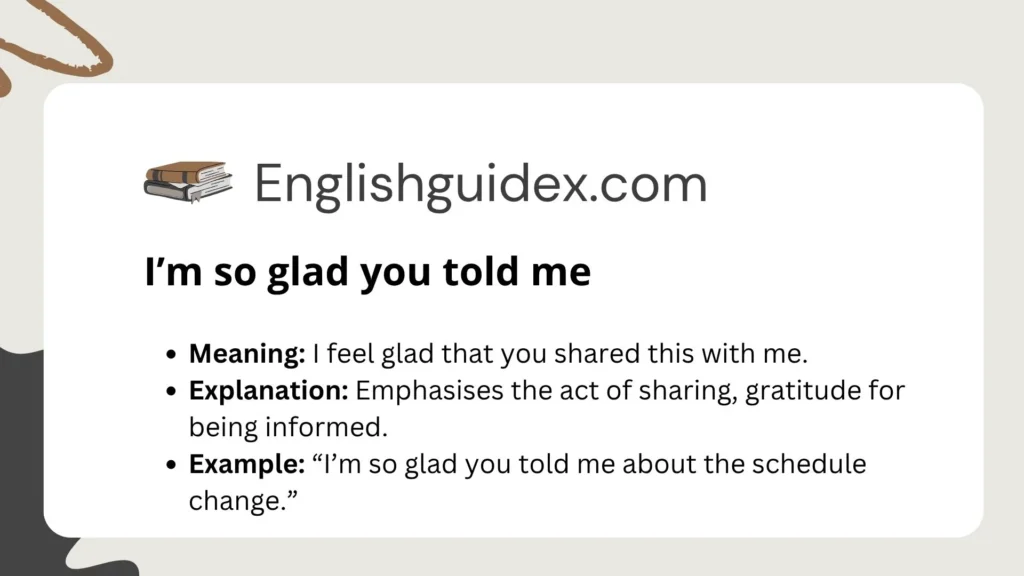
- Phrase:I’m so glad you told me
- Meaning: I feel glad that you shared this with me.
- Explanation: Emphasises the act of sharing, gratitude for being informed.
- Example: “I’m so glad you told me about the schedule change.”
- Best Use: Informal or semi-formal
- Worst Use: Very formal document (“I’m so glad you told me” too conversational)
- Tone: Friendly
- Phrase:That’s exactly what I hoped to hear
- Meaning: What you told me matches what I wanted or expected to hear.
- Explanation: Shows that you had a concern or expectation and this news meets it.
- Example: “You completed the client review ahead of time? That’s exactly what I hoped to hear.”
- Best Use: Business/professional
- Worst Use: Very casual friend chat (“That’s exactly what I hoped to hear” may sound too formal)
- Tone: Professional
- Phrase:What a relief! / What a relief to hear that
- Meaning: I feel relieved (less worry) that this is the case.
- Explanation: Good when the news solves a worry or uncertainty.
- Example: “You found the missing files? What a relief to hear that.”
- Best Use: Informal or semi-formal when worry existed
- Worst Use: When there was no worry involved (“What a relief” may confuse the tone)
- Tone: Warm/relieved
- Phrase:That really brightens my day
- Meaning: Your news makes my day more cheerful.
- Explanation: Emphasises how the news affects you personally in positive way.
- Example: “You got accepted to grad school? That really brightens my day.”
- Best Use: Personal/informal
- Worst Use: Formal business email (“That really brightens my day” too casual)
- Tone: Friendly
- Phrase:I’m pleased for you
- Meaning: I feel pleased on your behalf.
- Explanation: More formal version of “happy for you.”
- Example: “You are now team lead? I’m pleased for you.”
- Best Use: Business semi-formal
- Worst Use: Very informal close friend chat (“I’m pleased for you” may sound stiff)
- Tone: Formal-friendly
- Phrase:That’s terrific to hear
- Meaning: It is terrific that I heard this.
- Explanation: High positive tone; “terrific” = very good.
- Example: “The system upgrade completed smoothly? That’s terrific to hear.”
- Best Use: Business or informal depending on relationship
- Worst Use: Ultra-formal document (“That’s terrific to hear” may appear too conversational)
- Tone: Friendly-positive
- Phrase:I couldn’t have asked for better news
- Meaning: This news is as good as I could hope for.
- Explanation: Acknowledges the news is excellent.
- Example: “Your team exceeded all KPIs? I couldn’t have asked for better news.”
- Best Use: Business/friendly when you want to praise
- Worst Use: Casual small talk (“I couldn’t have asked…” may sound heavy)
- Tone: Formal-emphatic
- Phrase:I’m really happy for you
- Meaning: I am truly and sincerely happy for you.
- Explanation: Emphasises sincerity and personal happiness for the person.
- Example: “You finished your first marathon? I’m really happy for you!”
- Best Use: Informal or semi-formal
- Worst Use: Very formal report (“I’m really happy for you” may sound too personal)
- Tone: Friendly-sincere
- (Bonus) Phrase:That’s uplifting news
- Meaning: The news lifts my spirits.
- Explanation: This phrase is slightly more literary and focuses on emotional effect.
- Example: “The feedback from the community was positive? That’s uplifting news.”
- Best Use: Semi-formal business or personal communications with some gravity
- Worst Use: Casual text message with a friend (“That’s uplifting news” may feel stiff)
- Tone: Warm-professional
Comparison Table
Here’s a quick table comparing 7 of the alternatives by tone and best usage:
| Phrase | Tone | Best Use Context |
|---|---|---|
| I’m delighted to hear that | Formal / High positive | Official announcements, senior emails |
| That’s excellent | Neutral professional | Business updates, project communications |
| I’m so happy for you | Friendly / Personal | Informal chats, messages to friends |
| What fantastic news! | Enthusiastic informal | Celebrations, personal good news |
| That really brightens my day | Friendly, casual | Friendly connection, informal note |
| I’m pleased to hear that | Formal-friendly | Business correspondence with clients |
| Such a relief to hear | Warm, relieved tone | When news resolves a worry |
FAQs
Q1: Can I always say “happy to hear that” in business emails?
Yes, you can, and it is polite. But if the email is formal (to a senior client, or a legal document) you might prefer a slightly more formal variant (for example, “I’m pleased to hear that”).
Q2: Is “glad to hear that” the same as “happy to hear that”?
Yes — very similar meaning. A nuance: “glad” is slightly less emotional than “happy,” so it can feel more neutral. English Language & Usage Stack Exchange+1
Q3: When is it NOT good to use “happy to hear that”?
- When you want to express very strong joy for someone’s success (you might use “I’m overjoyed” or “I couldn’t be happier”).
- When you want to remain extremely formal and neutral (you might choose “I’m pleased to learn”).
- When the news is about a serious or solemn context (e.g., a sad subject), you’d use a different kind of response altogether.
Q4: How do I choose between formal vs informal alternatives?
Check your audience and your relationship:
- Business email to senior/external party → go formal (“I’m pleased to hear that”).
- Message to colleague/friend → go friendly (“I’m so happy for you”).
Also consider the news: if it’s major or personal, you might use an emphatic phrase.
Q5: Can I combine phrases (e.g., “I’m delighted and relieved to hear that”)?
Yes — combining is fine if it matches your emotion and context. Just ensure it remains clear and appropriate in tone.
Conclusion
Using the same simple phrase over and over can make your English communication feel predictable. By learning and practicing these other ways to say “happy to hear that”, you’ll sound more natural, confident, and versatile.
Whether you’re writing a formal business email or chatting with a friend, you’ll have the right tone for the moment. Go ahead—pick a few favorites and try them out the next time someone shares good news!

David Jonson is an experienced English language writer who specializes in clear, practical, and learner-friendly content. He helps students and professionals improve their communication skills with confidence.