Last updated on December 2nd, 2025 at 04:35 pm
Valentine’s Day is all about expressing love, appreciation, and kindness. Most people say “Happy Valentine’s Day!”, but using the same phrase every year can sound repetitive.
Whether you’re writing to a loved one, a coworker, or a client, the words you choose matter. The right phrase can make your message sound warm, elegant, or professional, depending on the tone you want.
In this guide, you’ll learn over 20 alternative ways to say “Happy Valentine’s Day”, along with meanings, examples, and usage tips.
You’ll also discover which expressions fit formal, casual, or romantic contexts. By the end, you’ll know how to make your Valentine messages sound more natural, creative, and heartfelt.
💭 What Does “Happy Valentine’s Day” Mean?
The phrase “Happy Valentine’s Day” is a greeting used on February 14th to celebrate love and affection between partners, friends, and family.
- “Happy” expresses good wishes and positivity.
- “Valentine’s Day” refers to the holiday dedicated to Saint Valentine, symbolizing love and romance.
Grammatically, it’s a declarative sentence used as a greeting, similar to “Merry Christmas” or “Happy New Year.”
📅 When to Use “Happy Valentine’s Day”
You can use “Happy Valentine’s Day” in both spoken and written English. It fits most situations, from romantic to friendly.
✅ Common Usage:
- Greeting cards
- Social media messages
- Texts to friends or family
- Emails or notes to colleagues
🧑💼 In Professional Contexts:
If you’re emailing coworkers or clients, keep it short and polite, such as:
“Wishing you a pleasant Valentine’s Day!”
It keeps the tone positive without sounding overly personal.
🤔 Is It Professional or Polite to Say “Happy Valentine’s Day”?
Yes — but it depends on who you’re talking to.
- It’s polite when used casually among friends or family.
- It’s professional if used with neutral language (avoid romantic undertones).
- It can sound too personal if said to someone you don’t know well in a work setting.
So, tone matters. If you’re unsure, use a neutral or warm alternative.
⚖️ Pros and Cons of Using “Happy Valentine’s Day”
Pros:
- Universally understood
- Friendly and kind
- Works in most informal contexts
Cons:
- Overused and predictable
- May sound too personal at work
- Lacks creativity or emotional depth
💬 20+ Alternatives to Say “Happy Valentine’s Day” (With Examples)
Below are creative, formal, and friendly alternatives you can use. Each includes meaning, tone, and example usage.
1. Wishing You a Lovely Valentine’s Day
Meaning: Expressing warm wishes for someone’s special day.
Explanation: Adds a soft, caring touch to your message.
Example: “Wishing you a lovely Valentine’s Day filled with happiness.”
Best Use: Formal or friendly notes.
Worst Use: Business emails to strangers.
Tone: Warm and polite.
2. Hope Your Day Is Filled with Love
Meaning: Wishing someone a day full of affection and positivity.
Explanation: Sounds kind and caring without being romantic.
Example: “Hope your day is filled with love and joy.”
Best Use: Friends, colleagues, family.
Worst Use: Professional corporate emails.
Tone: Friendly and heartfelt.
3. Sending You Valentine’s Day Cheer
Meaning: Spreading happiness and good vibes on Valentine’s Day.
Explanation: Cheerful and positive greeting.
Example: “Sending you Valentine’s Day cheer from across the miles!”
Best Use: Social media posts, messages to friends.
Worst Use: Romantic partners (too casual).
Tone: Happy and light.
4. Have a Wonderful Valentine’s Day
Meaning: Wishing someone a great day of love.
Explanation: Safe and neutral — works in any context.
Example: “Have a wonderful Valentine’s Day with your loved ones.”
Best Use: All audiences.
Worst Use: None; it’s universal.
Tone: Neutral and polite.
5. Enjoy This Special Day of Love
Meaning: Encouraging someone to celebrate Valentine’s joyfully.
Explanation: Sounds warm and optimistic.
Example: “Enjoy this special day of love and kindness.”
Best Use: Friends, partners, or family.
Worst Use: Corporate use.
Tone: Cheerful and caring.
6. Warm Wishes on Valentine’s Day
Meaning: A gentle, polite way to offer good wishes.
Explanation: Ideal for professional or polite greetings.
Example: “Warm wishes on Valentine’s Day to you and yours.”
Best Use: Business or formal settings.
Worst Use: Intimate messages.
Tone: Formal and respectful.
7. Wishing You Love and Happiness
Meaning: A general good-wish phrase.
Explanation: Great for expressing kindness beyond romance.
Example: “Wishing you love and happiness today and always.”
Best Use: Friends, coworkers, family.
Worst Use: Cold corporate settings.
Tone: Friendly and uplifting.
8. May Your Day Be as Sweet as You
Meaning: Complimenting and wishing happiness.
Explanation: Slightly flirty but sweet.
Example: “May your day be as sweet as you, my dear.”
Best Use: Romantic partners.
Worst Use: Professional or formal messages.
Tone: Romantic and playful.
9. Celebrate Love Today and Every Day
Meaning: Encourages appreciation of love beyond Valentine’s Day.
Explanation: Positive and thoughtful.
Example: “Celebrate love today and every day with a happy heart.”
Best Use: Social posts or inspirational messages.
Worst Use: Cold formal emails.
Tone: Inspirational and warm.
10. Lots of Love on Valentine’s Day
Meaning: Expressing affection and care.
Explanation: Direct, affectionate, yet simple.
Example: “Lots of love on Valentine’s Day, my friend.”
Best Use: Friends, family, partners.
Worst Use: Business.
Tone: Friendly and affectionate.
11. Happy Heart Day
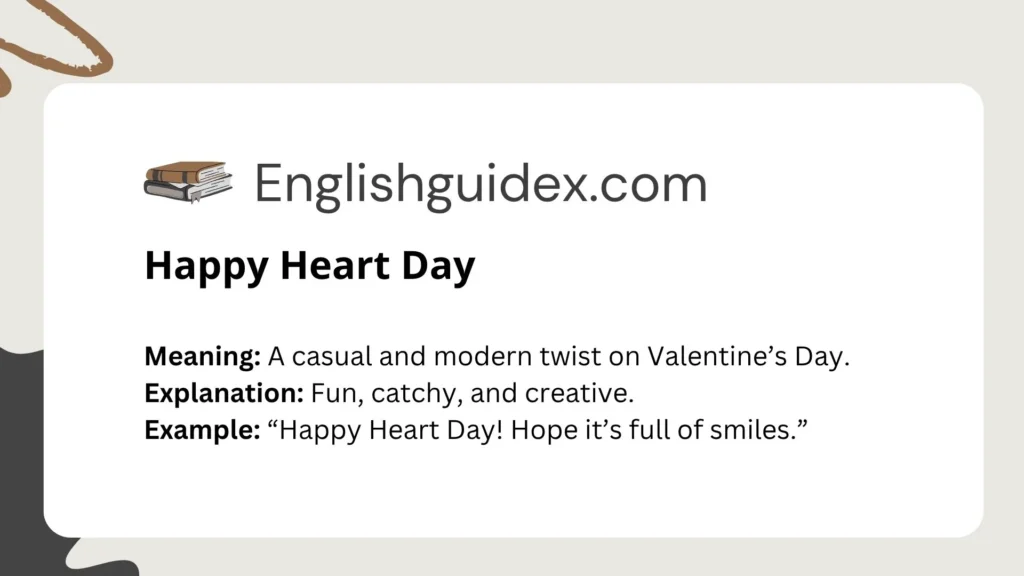
Meaning: A casual and modern twist on Valentine’s Day.
Explanation: Fun, catchy, and creative.
Example: “Happy Heart Day! Hope it’s full of smiles.”
Best Use: Social media, texts.
Worst Use: Corporate or formal emails.
Tone: Playful and casual.
12. Cheers to Love and Friendship
Meaning: Celebrating both love and companionship.
Explanation: Great for non-romantic contexts.
Example: “Cheers to love and friendship this Valentine’s!”
Best Use: Friends or colleagues.
Worst Use: Romantic partners expecting affection.
Tone: Friendly and inclusive.
13. Spreading the Love This Valentine’s Day
Meaning: Sharing positivity and care.
Explanation: Great for campaigns, organizations, or social causes.
Example: “We’re spreading the love this Valentine’s Day — join us!”
Best Use: Business campaigns or group messages.
Worst Use: Personal romance.
Tone: Community-focused and cheerful.
14. Happy Love Day
Meaning: A simpler and trendier version of the original.
Explanation: Common among young people online.
Example: “Happy Love Day to all the amazing souls out there!”
Best Use: Social media, friends.
Worst Use: Professional emails.
Tone: Modern and relaxed.
15. Have a Romantic Valentine’s Day
Meaning: Wishing someone a romantic experience.
Explanation: Perfect for couples or partners.
Example: “Have a romantic Valentine’s Day, my love.”
Best Use: Romantic relationships.
Worst Use: Friends or colleagues.
Tone: Romantic and warm.
16. Wishing You a Day Full of Sweet Surprises
Meaning: Hoping someone enjoys pleasant moments.
Explanation: Creative and fun.
Example: “Wishing you a day full of sweet surprises and smiles.”
Best Use: Friends, partners, or children.
Worst Use: Formal settings.
Tone: Playful and happy.
17. Hope You Feel Loved Today
Meaning: A kind way to remind someone they’re appreciated.
Explanation: Empathetic and comforting.
Example: “Hope you feel loved today — you deserve it!”
Best Use: Friends or family.
Worst Use: Cold corporate settings.
Tone: Warm and supportive.
18. Sending Valentine’s Hugs Your Way
Meaning: Sharing affection from afar.
Explanation: Great for long-distance connections.
Example: “Sending Valentine’s hugs your way from miles away!”
Best Use: Friends, family.
Worst Use: Workplace communication.
Tone: Friendly and affectionate.
19. Wishing You a Beautiful Valentine’s Evening
Meaning: A charming way to close the day.
Explanation: Ideal for late-day greetings.
Example: “Wishing you a beautiful Valentine’s evening with your loved one.”
Best Use: Romantic or friendly messages.
Worst Use: Formal corporate communication.
Tone: Gentle and polite.
20. Love Is in the Air — Enjoy the Day!
Meaning: A cheerful way to mark Valentine’s spirit.
Explanation: Adds fun and energy to your message.
Example: “Love is in the air — enjoy the day with laughter!”
Best Use: Social media, friends.
Worst Use: Business or formal contexts.
Tone: Cheerful and playful.
21. Happy February 14th!
Meaning: Neutral way to recognize the date.
Explanation: A safe choice if you want to avoid romantic tone.
Example: “Happy February 14th! Hope your day is full of joy.”
Best Use: Work emails, acquaintances.
Worst Use: Romantic partners.
Tone: Neutral and polite.
22. May Love and Joy Fill Your Day
Meaning: Expressing general goodwill.
Explanation: Elegant and polite without being personal.
Example: “May love and joy fill your day and heart.”
Best Use: Formal greetings or cards.
Worst Use: Too formal for texting friends.
Tone: Formal and kind.
📊 Comparison Table of Common Alternatives
| Phrase | Tone | Best For | Formality | Emotional Level |
|---|---|---|---|---|
| Wishing You a Lovely Valentine’s Day | Warm | Friends, coworkers | Medium | Moderate |
| Have a Wonderful Valentine’s Day | Neutral | All | High | Low |
| May Love and Joy Fill Your Day | Formal | Clients, elders | High | Moderate |
| Hope Your Day Is Filled with Love | Friendly | Friends, family | Low | High |
| Cheers to Love and Friendship | Casual | Groups, colleagues | Medium | Moderate |
| Happy Heart Day | Playful | Social media | Low | High |
❓ FAQs
1. Can I say “Happy Valentine’s Day” to coworkers?
Yes, but keep it professional. Use phrases like “Wishing you a pleasant Valentine’s Day.”
2. What’s the most romantic alternative?
“May your day be as sweet as you” or “Have a romantic Valentine’s Day.”
3. What’s a safe message for clients?
“Warm wishes on Valentine’s Day” — it’s polite and business-appropriate.
4. Are there alternatives for friends?
Yes — try “Cheers to love and friendship” or “Hope your day is filled with love.”
5. How can I sound more creative online?
Use modern variations like “Happy Heart Day” or “Spreading the love this Valentine’s Day!”
❤️ Conclusion
Words can make your Valentine’s wishes more memorable and personal. Whether you’re writing to your partner, friend, or colleague, choosing the right phrase shows care and thoughtfulness.
Experiment with these alternatives to sound more natural, confident, and expressive in English. Remember — love doesn’t always need fancy words; it just needs sincerity.

David Jonson is an experienced English language writer who specializes in clear, practical, and learner-friendly content. He helps students and professionals improve their communication skills with confidence.