Last updated on December 2nd, 2025 at 04:26 pm
Starting a conversation or email with “Hope all is well” is common in English. It’s a polite way to show concern for someone’s wellbeing and establish a friendly tone. However, using the same phrase repeatedly can sound dull or impersonal.
Knowing other ways to say “hope all is well” allows you to vary your language, sound more natural, and adjust your tone depending on the situation.
Choosing the right alternative can make your communication more warm, professional, or casual.
For English learners and professionals, mastering these variations is a simple way to improve fluency, show attentiveness, and make a better impression in emails, chats, or conversations. In this guide, you’ll find 12+ alternative phrases, examples, and tips for when and how to use them.
What Does “Hope All Is Well” Mean?
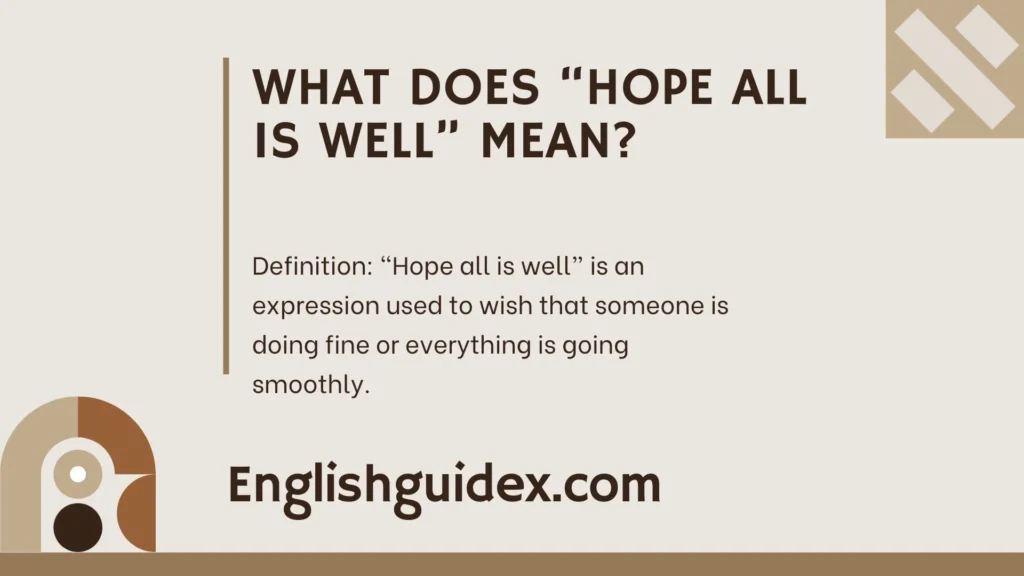
Definition: “Hope all is well” is an expression used to wish that someone is doing fine or everything is going smoothly.
- Grammar Note:
- “Hope” functions as a verb expressing desire or expectation.
- “All is well” is a complete thought meaning that everything is fine.
- Function: It shows politeness and consideration for the recipient’s wellbeing, making it ideal for starting emails, messages, or conversations.
When to Use “Hope All Is Well”
This phrase is versatile and can be used in several contexts:
- Formal contexts: Emailing colleagues, clients, or supervisors.
- Informal contexts: Texting friends, family, or casual contacts.
- Written use: Emails, letters, messages, and social media.
- Spoken use: Phone calls, video meetings, or casual conversations.
Is It Professional or Polite to Say “Hope All Is Well”?
Yes, it is professional and polite, though it leans toward a neutral tone. It works well for:
- Emails to colleagues or clients.
- Opening messages to acquaintances or friends.
- Maintaining a friendly yet formal tone in communication.
However, in very formal corporate communication, alternatives like “I hope you are doing well” or “I trust this email finds you well” may be better.
Pros and Cons of Using “Hope All Is Well”
Pros:
- Polite and friendly.
- Easy to use in written or spoken form.
- Universally understood in professional and casual settings.
Cons:
- Overused and generic in emails.
- May sound impersonal if used repeatedly.
- Lacks emotional warmth or personal touch compared to alternatives.
12 Alternative Phrases to Say “Hope All Is Well”
Here are 12 useful alternatives, each with meaning, nuance, and examples.
1. I Hope You Are Doing Well
- Meaning: Wishes good health or general wellbeing.
- Explanation: Slightly more formal and polished than “hope all is well.”
- Example Sentence: “I hope you are doing well and had a great weekend.”
- Best Use: Formal, Business, Personal
- Worst Use: Casual texts with friends
- Tone: Formal / Friendly
2. I Trust You Are Doing Well
- Meaning: Politely expresses hope for someone’s wellbeing.
- Explanation: More formal; often used in professional emails.
- Example Sentence: “I trust you are doing well after the recent project launch.”
- Best Use: Business, Formal
- Worst Use: Casual conversations
- Tone: Formal / Neutral
3. I Hope Everything Is Going Well
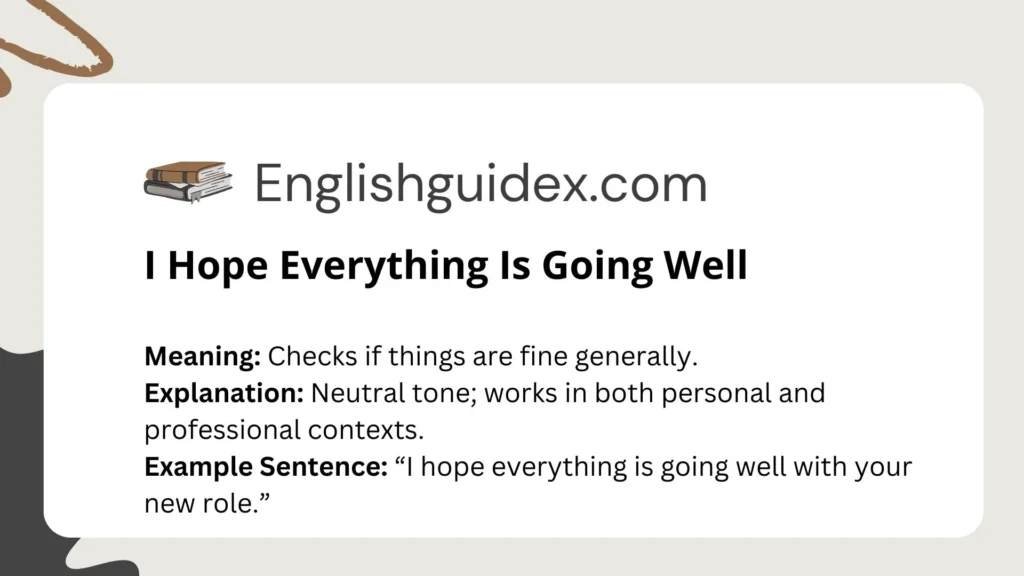
- Meaning: Checks if things are fine generally.
- Explanation: Neutral tone; works in both personal and professional contexts.
- Example Sentence: “I hope everything is going well with your new role.”
- Best Use: Personal, Business
- Worst Use: Very casual slang
- Tone: Friendly / Neutral
4. I Hope All Is Going Smoothly
- Meaning: Wishes that tasks or life events are going well.
- Explanation: Slightly informal but professional; good for ongoing projects.
- Example Sentence: “I hope all is going smoothly with the website update.”
- Best Use: Business, Personal
- Worst Use: Texting close friends casually
- Tone: Neutral / Professional
5. I Hope You’re Having a Great Day
- Meaning: Casual greeting showing care.
- Explanation: More personal and upbeat than standard “hope all is well.”
- Example Sentence: “I hope you’re having a great day! Just checking in on the report.”
- Best Use: Informal, Business casual
- Worst Use: Very formal corporate emails
- Tone: Friendly / Warm
6. Trust You’re Doing Well
- Meaning: Short, polite check-in.
- Explanation: Informal but respectful; often used in emails or chats.
- Example Sentence: “Trust you’re doing well. Can we schedule a meeting this week?”
- Best Use: Business casual, Personal
- Worst Use: Highly formal correspondence
- Tone: Friendly / Neutral
7. I Hope This Message Finds You Well
- Meaning: Formal greeting expressing hope for wellbeing.
- Explanation: Common in professional emails and letters.
- Example Sentence: “I hope this message finds you well. I wanted to discuss the upcoming deadline.”
- Best Use: Formal, Business
- Worst Use: Texts to friends
- Tone: Formal / Polite
8. I Hope You’re Keeping Well
- Meaning: Shows concern for health and overall wellbeing.
- Explanation: Polite and professional, often used in emails or letters.
- Example Sentence: “I hope you’re keeping well during these busy times.”
- Best Use: Business, Personal
- Worst Use: Very casual messaging
- Tone: Formal / Friendly
9. I Hope You’re Having a Good Week
- Meaning: Wishes someone is enjoying their week.
- Explanation: Friendly, casual, and positive; works for colleagues or friends.
- Example Sentence: “I hope you’re having a good week! Just following up on the project.”
- Best Use: Informal, Business casual
- Worst Use: Strict formal emails
- Tone: Friendly / Casual
10. I Hope Life Is Treating You Well
- Meaning: Polite, slightly emotional check-in.
- Explanation: Suitable for personal letters or emails to close colleagues.
- Example Sentence: “I hope life is treating you well and you’re enjoying the new role.”
- Best Use: Personal, Business casual
- Worst Use: Formal corporate emails
- Tone: Friendly / Warm
11. Trust You’re Having a Good Day
- Meaning: Short and friendly greeting.
- Explanation: Slightly informal; shows politeness without being stiff.
- Example Sentence: “Trust you’re having a good day! I wanted to get your feedback.”
- Best Use: Informal, Personal
- Worst Use: Highly formal emails
- Tone: Friendly / Neutral
12. I Hope All Is Going Well on Your End
- Meaning: Checks on someone’s situation or projects.
- Explanation: Informal-professional hybrid; works in emails or casual chats.
- Example Sentence: “I hope all is going well on your end. Let me know if you need assistance.”
- Best Use: Business, Informal
- Worst Use: Very casual texting
- Tone: Neutral / Friendly
Comparison Table of Top Alternatives
| Phrase | Tone | Best Use | Worst Use |
|---|---|---|---|
| I Hope You Are Doing Well | Formal / Friendly | Personal, Business | Casual texting |
| I Trust You Are Doing Well | Formal / Neutral | Business, Professional | Casual chats |
| I Hope Everything Is Going Well | Friendly / Neutral | Personal, Business | Slang messaging |
| I Hope You’re Having a Great Day | Friendly / Warm | Informal, Business casual | Strict formal emails |
| I Hope This Message Finds You Well | Formal / Polite | Professional emails | Texts to friends |
| Trust You’re Doing Well | Friendly / Neutral | Business casual | Highly formal letters |
| I Hope You’re Keeping Well | Formal / Friendly | Personal, Business | Slang texting |
FAQs
Q1: Can I use these phrases in business emails?
A: Yes, phrases like “I hope you are doing well” or “I hope this message finds you well” are ideal for professional emails.
Q2: Which phrases are best for texting friends?
A: Casual options like “I hope you’re having a great day” or “Trust you’re having a good day” are perfect.
Q3: Are some phrases too formal for casual use?
A: Yes, expressions like “I trust you are doing well” are better suited for business or formal emails.
Q4: Can these phrases be used at the start of a conversation?
A: Absolutely. They are commonly used to open emails, calls, or messages politely.
Q5: How can I sound more natural using these phrases?
A: Vary your greetings depending on the context. Mix formal phrases in emails with casual ones in personal messages to sound fluent and warm.
Conclusion
While “hope all is well” is polite and neutral, using alternatives helps make your communication more natural, engaging, and thoughtful.
Depending on the context, you can choose formal, casual, or friendly phrases that match the tone of your conversation or email. Experimenting with these options not only improves fluency but also shows attentiveness and professionalism.
Mastering these variations is a simple yet powerful step toward confident English communication.

David Jonson is an experienced English language writer who specializes in clear, practical, and learner-friendly content. He helps students and professionals improve their communication skills with confidence.