The phrase “How cool” is a common and friendly way to show interest, surprise, or approval in English.
People use it when they hear good news, see something impressive, or feel excited about an idea. While it is simple and fun, using the same phrase again and again can sound boring or too casual—especially in professional or formal settings.
That is why learning other ways to say “how cool” is important. Different words can change your tone, show respect, and make your English sound more natural.
In this guide, you will learn 23+ alternatives to “how cool”, with clear meanings, examples, and best-use tips. These phrases will help English learners and professionals communicate with confidence in both formal and informal situations.
What Does “How Cool” Mean?
“How cool” is an informal expression used to show interest, excitement, admiration, or approval.
Grammar Explanation:
- It is an exclamatory phrase.
- It often stands alone as a reaction.
- It does not need a subject or verb.
Example:
- You got a new job? How cool!
When to Use “How Cool”
You can use “how cool” in many friendly situations:
- Casual talks with friends
- Social media comments
- Informal emails or messages
- Spoken English in relaxed settings
It works best when you want to sound friendly, relaxed, and positive.
Is It Professional or Polite to Say “How Cool”?
In most cases, “how cool” is not professional.
- It sounds too casual for business emails.
- It may feel immature in formal meetings.
- It is fine for coworkers you know well, but not for clients or managers.
In professional settings, it is better to use formal alternatives to “how cool”, such as:
- That’s impressive.
- That’s great to hear.
Pros and Cons of Using “How Cool”
Pros
- Easy to use
- Friendly and warm
- Natural in casual English
- Good for quick reactions
Cons
- Too informal for business
- Not suitable for academic writing
- Overused in daily speech
- Can sound unprofessional
23+ Other Ways to Say “How Cool” (With Examples)
Below are 23+ synonyms for “how cool”, each explained clearly for easy learning.
1. That’s awesome
Meaning: Something very good or exciting
Explanation: A popular and strong positive reaction
Example Sentence: You won the contest? That’s awesome!
Best Use: Informal, Casual
Worst Use: Formal meetings
Tone: Friendly
2. That’s amazing
Meaning: Something surprising and impressive
Explanation: Shows strong admiration
Example Sentence: Your artwork is amazing.
Best Use: Casual, Semi-formal
Worst Use: Very formal writing
Tone: Emphatic
3. That’s impressive
Meaning: Worth respect or praise
Explanation: Sounds more professional
Example Sentence: Your presentation was impressive.
Best Use: Business, Formal
Worst Use: Very casual chats
Tone: Formal
4. That’s great
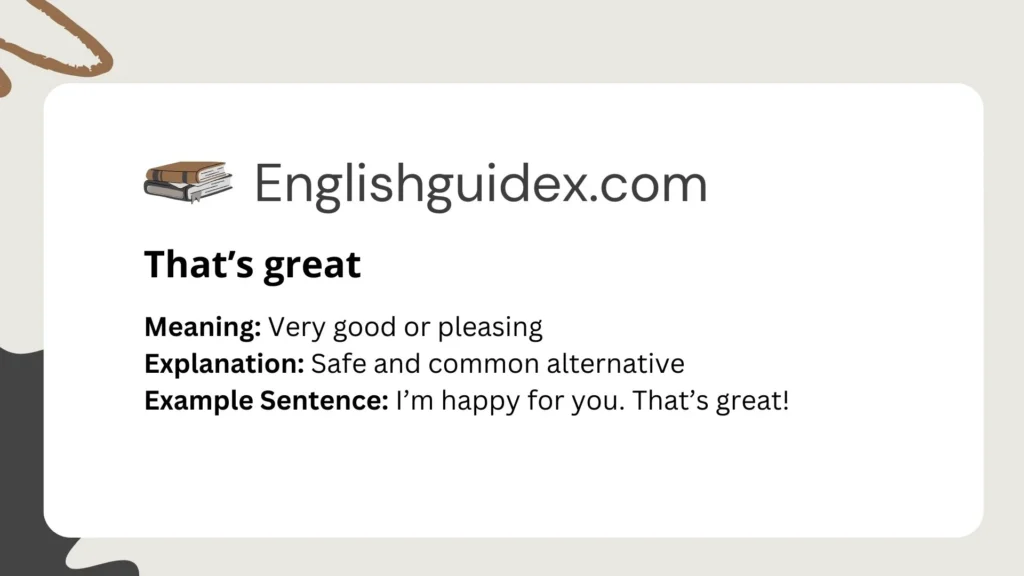
Meaning: Very good or pleasing
Explanation: Safe and common alternative
Example Sentence: I’m happy for you. That’s great!
Best Use: All contexts
Worst Use: None
Tone: Neutral
5. That’s fantastic
Meaning: Extremely good
Explanation: Stronger than “great”
Example Sentence: Your results are fantastic.
Best Use: Casual, Business
Worst Use: Serious academic writing
Tone: Enthusiastic
6. That’s wonderful
Meaning: Very pleasing or joyful
Explanation: Polite and warm
Example Sentence: That’s wonderful news.
Best Use: Formal, Polite talk
Worst Use: Slang conversations
Tone: Friendly-formal
7. That’s brilliant
Meaning: Very smart or impressive
Explanation: Common in British English
Example Sentence: Your idea is brilliant.
Best Use: Casual, Work chats
Worst Use: Very formal documents
Tone: Positive
8. That’s fascinating
Meaning: Very interesting
Explanation: Shows deep interest
Example Sentence: Your research is fascinating.
Best Use: Academic, Formal
Worst Use: Casual slang
Tone: Formal
9. That’s remarkable
Meaning: Unusual and impressive
Explanation: Sounds refined and polite
Example Sentence: Your achievement is remarkable.
Best Use: Formal, Business
Worst Use: Casual texting
Tone: Formal
10. That’s exciting
Meaning: Makes you feel happy and eager
Explanation: Good for future events
Example Sentence: Your trip sounds exciting.
Best Use: Casual, Semi-formal
Worst Use: Legal writing
Tone: Friendly
11. That’s neat
Meaning: Simple and cool
Explanation: Casual and relaxed
Example Sentence: Your room looks neat.
Best Use: Informal
Worst Use: Business emails
Tone: Casual
12. That’s interesting
Meaning: Makes you curious
Explanation: Neutral and safe phrase
Example Sentence: That’s an interesting idea.
Best Use: Formal, Casual
Worst Use: When strong emotion is needed
Tone: Neutral
13. That’s outstanding
Meaning: Extremely good
Explanation: Strong praise
Example Sentence: Your work is outstanding.
Best Use: Business, Awards
Worst Use: Casual slang
Tone: Formal
14. That’s incredible
Meaning: Hard to believe
Explanation: Shows surprise
Example Sentence: You ran a marathon? Incredible!
Best Use: Casual, Semi-formal
Worst Use: Technical writing
Tone: Emphatic
15. That’s impressive work
Meaning: Praise for effort
Explanation: Professional compliment
Example Sentence: This report is impressive work.
Best Use: Business
Worst Use: Casual chat
Tone: Professional
16. Love that
Meaning: Strong personal liking
Explanation: Very casual and modern
Example Sentence: Your style? Love that!
Best Use: Social media
Worst Use: Office emails
Tone: Casual
17. Nice one
Meaning: Well done
Explanation: Friendly praise
Example Sentence: You fixed it? Nice one!
Best Use: Informal
Worst Use: Formal writing
Tone: Friendly
18. That’s pretty cool
Meaning: Mild excitement
Explanation: Softer than “how cool”
Example Sentence: Your idea is pretty cool.
Best Use: Casual
Worst Use: Formal meetings
Tone: Relaxed
19. That’s admirable
Meaning: Worth respect
Explanation: Moral or effort-based praise
Example Sentence: Your honesty is admirable.
Best Use: Formal
Worst Use: Slang talk
Tone: Respectful
20. That’s clever
Meaning: Smart solution
Explanation: Praises thinking
Example Sentence: That’s a clever idea.
Best Use: Casual, Business
Worst Use: Emotional praise
Tone: Positive
21. That’s something special
Meaning: Unique and good
Explanation: Emotional appreciation
Example Sentence: Your gift is something special.
Best Use: Personal talk
Worst Use: Reports
Tone: Warm
22. Well done
Meaning: Good job
Explanation: Simple and polite praise
Example Sentence: You handled that well. Well done.
Best Use: Business, School
Worst Use: Very casual chats
Tone: Formal-neutral
23. That’s top-notch
Meaning: High quality
Explanation: Semi-formal praise
Example Sentence: Your service is top-notch.
Best Use: Business, Reviews
Worst Use: Academic papers
Tone: Confident
24. That’s excellent
Meaning: Extremely good
Explanation: Professional and clear
Example Sentence: Your performance was excellent.
Best Use: Formal
Worst Use: Slang use
Tone: Professional
Comparison Table: Top Alternatives to “How Cool”
| Phrase | Tone | Best Use |
|---|---|---|
| That’s awesome | Friendly | Casual talk |
| That’s impressive | Formal | Business |
| That’s great | Neutral | All settings |
| That’s fascinating | Formal | Academic |
| Love that | Casual | Social media |
| Well done | Professional | Work, school |
FAQs
1. Is “how cool” slang?
Yes, it is informal and conversational.
2. Can I use “how cool” at work?
Only in casual talks with coworkers.
3. What is a formal way to say “how cool”?
“That’s impressive” or “That’s excellent.”
4. Is “awesome” professional?
Not usually. It is better for casual settings.
5. Which phrase is safest in emails?
“That’s great” or “Well done.”
Conclusion
Learning other ways to say “how cool” helps you sound more natural, confident, and professional in English. Each phrase carries a different tone, emotion, and level of formality.
By choosing the right words, you can express excitement in a way that fits the situation. Try using these alternatives to “how cool” in daily conversations, emails, and presentations.
With practice, your English will feel smoother and more expressive. Small word changes can make a big difference—so start experimenting today!

David Jonson is an experienced English language writer who specializes in clear, practical, and learner-friendly content. He helps students and professionals improve their communication skills with confidence.