Last updated on December 2nd, 2025 at 04:29 pm
In English, the phrase “I would be remiss” is often used to admit a potential oversight or acknowledge that not doing something could be careless or improper.
While it’s common in formal writing, speeches, or professional emails, relying on it repeatedly can sound stiff or overly formal. Learning other ways to say “I would be remiss” helps you vary your language, match the tone to your audience, and express yourself clearly.
Using alternative expressions can make your speech or writing sound polished, natural, and professional, whether you’re addressing colleagues, friends, or clients. In this article, we explore 12+ alternatives to “I would be remiss”, with definitions, examples, and guidance for formal, informal, and business contexts.
What Does “I Would Be Remiss” Mean?
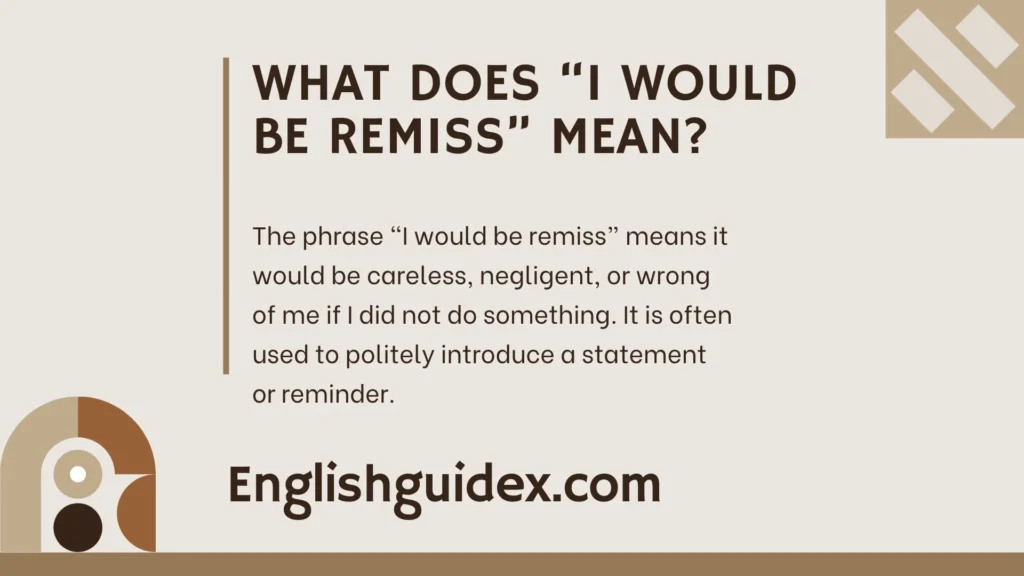
Definition:
The phrase “I would be remiss” means it would be careless, negligent, or wrong of me if I did not do something. It is often used to politely introduce a statement or reminder.
Grammar Note:
- Would be remiss → conditional, indicating a potential lapse.
- Typically followed by “if I did not…” or “not mentioning…”.
- Example: “I would be remiss if I didn’t thank everyone for their hard work.”
Function: It acknowledges responsibility or courtesy while introducing an action, advice, or reminder.
When to Use “I Would Be Remiss”
Formal Contexts
- Business emails and memos
- Speeches and presentations
- Academic or professional writing
Informal Contexts
- Conversations with colleagues
- Written notes to acquaintances
Written Use
- Emails, letters, reports, speeches
Spoken Use
- Meetings, presentations, interviews
Is It Professional or Polite to Say “I Would Be Remiss”?
Yes. The phrase is polite, professional, and often used to show conscientiousness.
Professional Usage Tips:
- Use in emails to colleagues, mentors, or clients.
- Appropriate in reports or presentations.
- Avoid overusing it in casual conversation, as it may sound overly formal.
Pros and Cons of Using “I Would Be Remiss”
Pros:
- Shows professionalism and awareness
- Softens reminders or suggestions
- Polite and respectful
Cons:
- Can sound outdated or stiff in casual contexts
- Not suitable for very informal writing
- May confuse English learners due to uncommon vocabulary
12 Alternatives to “I Would Be Remiss” (With Examples)
Here are practical alternatives to diversify your language:
1. Phrase: I Should Mention
Meaning: Indicates a point that needs to be addressed.
Explanation: Polite, neutral, widely used.
Example Sentence: “I should mention that the report is due tomorrow.”
Best Use: Informal, Business
Worst Use: Very formal speeches
Tone: Neutral / Friendly
2. Phrase: I Must Acknowledge
Meaning: Shows responsibility or recognition.
Explanation: Slightly formal, conveys seriousness.
Example Sentence: “I must acknowledge the team’s efforts on this project.”
Best Use: Formal, Business
Worst Use: Casual conversation
Tone: Formal / Emphatic
3. Phrase: I Can’t Forget
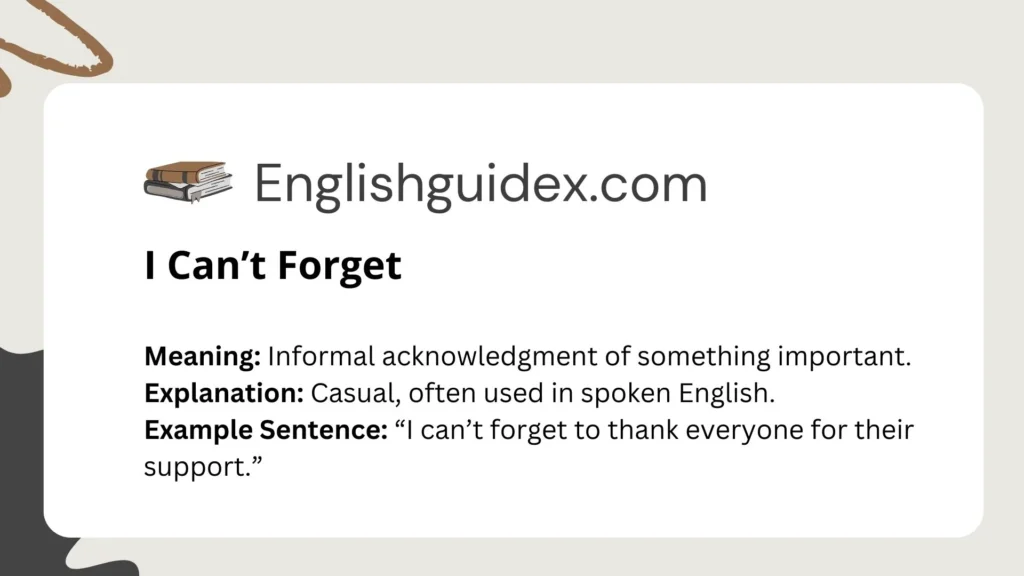
Meaning: Informal acknowledgment of something important.
Explanation: Casual, often used in spoken English.
Example Sentence: “I can’t forget to thank everyone for their support.”
Best Use: Informal, Personal
Worst Use: Corporate reports
Tone: Friendly / Casual
4. Phrase: It Would Be Negligent of Me
Meaning: Stronger formal alternative emphasizing responsibility.
Explanation: Highlights duty or obligation.
Example Sentence: “It would be negligent of me not to credit our volunteers.”
Best Use: Formal, Business
Worst Use: Casual conversation
Tone: Formal / Neutral
5. Phrase: I Ought to Point Out
Meaning: Suggests a polite reminder.
Explanation: Common in semi-formal and spoken English.
Example Sentence: “I ought to point out the changes in the schedule.”
Best Use: Semi-formal, Spoken
Worst Use: Very casual texting
Tone: Neutral / Friendly
6. Phrase: I Feel Obliged to Say
Meaning: Indicates social or moral duty.
Explanation: Polite and sincere.
Example Sentence: “I feel obliged to say that your feedback was invaluable.”
Best Use: Formal, Semi-formal
Worst Use: Slang or casual writing
Tone: Formal / Emphatic
7. Phrase: It Would Be Wrong of Me
Meaning: Expresses potential wrongdoing if ignored.
Explanation: Strong, formal tone.
Example Sentence: “It would be wrong of me to leave without thanking the organizers.”
Best Use: Formal, Business
Worst Use: Casual conversations
Tone: Formal / Emphatic
8. Phrase: I Should Point Out
Meaning: Neutral reminder or clarification.
Explanation: Suitable in spoken and written English.
Example Sentence: “I should point out that the deadline has been extended.”
Best Use: Business, Semi-formal
Worst Use: Casual texts
Tone: Neutral / Friendly
9. Phrase: I Don’t Want to Neglect
Meaning: Expresses care not to overlook something.
Explanation: Polite, informal or semi-formal tone.
Example Sentence: “I don’t want to neglect mentioning the contributions of our interns.”
Best Use: Semi-formal, Personal
Worst Use: Very formal reports
Tone: Friendly / Neutral
10. Phrase: I Would Fail in My Duty If
Meaning: Strong, formal way to acknowledge responsibility.
Explanation: Rare in everyday speech, more formal writing.
Example Sentence: “I would fail in my duty if I didn’t acknowledge your assistance.”
Best Use: Formal, Professional
Worst Use: Casual conversation
Tone: Formal / Emphatic
11. Phrase: I Can’t Let Pass
Meaning: Informal expression indicating the need to address something.
Explanation: Often used in speech or personal writing.
Example Sentence: “I can’t let pass the chance to thank everyone for their support.”
Best Use: Informal, Personal
Worst Use: Corporate letters
Tone: Friendly / Casual
12. Phrase: I Need to Recognize
Meaning: Polite acknowledgment of someone or something.
Explanation: Professional, clear, and respectful.
Example Sentence: “I need to recognize the efforts of all team members.”
Best Use: Business, Formal
Worst Use: Casual texting
Tone: Formal / Neutral
Comparison Table of Top Alternatives
| Phrase | Tone | Best Use | Worst Use |
|---|---|---|---|
| I Should Mention | Neutral | Informal, Business | Very formal speeches |
| I Must Acknowledge | Formal | Business, Professional | Casual conversation |
| It Would Be Negligent of Me | Formal | Formal, Business | Casual chats |
| I Ought to Point Out | Neutral | Semi-formal, Spoken | Slang texting |
| I Feel Obliged to Say | Formal | Formal, Semi-formal | Casual writing |
| I Don’t Want to Neglect | Neutral | Semi-formal, Personal | Very formal reports |
| I Would Fail in My Duty If | Formal | Formal, Professional | Casual conversation |
FAQs
Q1: Can I use “I would be remiss” in emails?
Yes. It is suitable for formal and semi-formal emails, especially when acknowledging responsibility.
Q2: Which alternatives are best for spoken English?
Phrases like “I should mention”, “I ought to point out”, and “I can’t forget” work naturally in conversations.
Q3: Are there casual ways to say “I would be remiss”?
Yes. Examples include “I can’t forget”, “I can’t let pass”, and “I don’t want to neglect.”
Q4: Which phrases sound most professional?
“I must acknowledge”, “It would be negligent of me”, and “I would fail in my duty if” are best in formal, professional contexts.
Q5: Can this phrase be used in public speeches?
Absolutely. It adds a polite, conscientious tone, especially when introducing acknowledgments or thanks.
Conclusion
Using alternatives to “I would be remiss” helps English learners and professionals vary their language, adjust tone, and sound more fluent.
While the original phrase is formal and polite, expressions like “I should mention”, “I feel obliged to say”, and “I don’t want to neglect” can be adapted for business, casual, or spoken settings.
Experimenting with these alternatives ensures your writing and speech are clear, natural, and professional. By varying your word choice, you can communicate responsibly while sounding confident and approachable.

David Jonson is an experienced English language writer who specializes in clear, practical, and learner-friendly content. He helps students and professionals improve their communication skills with confidence.