Last updated on December 2nd, 2025 at 04:40 pm
When someone says “keep up the good work”, they’re praising someone’s efforts and encouraging them to continue what they’re doing. It’s a positive, motivating phrase.
But if you use it too often, it can begin to sound repetitive or generic. Alternating your wording matters because word choice influences tone—whether you sound formal or informal, genuine or routine.
By using different expressions, you’ll show you’re thoughtful and you’ll help yourself sound more fluent and natural in English. In the following article, you’ll learn what the phrase means, when you can use it, and over 20 alternative phrases for formal, informal, business, or casual contexts.
What Does “Keep Up the Good Work” Mean?
The phrase “keep up the good work” means: continue doing what you’ve been doing because it is good. Grammatically, it uses the verb keep up (meaning maintain or persist) + the good work (referring to the positive actions or performance). You are encouraging someone to maintain their level of performance or behaviour.
When to Use “Keep Up the Good Work”
You can use this phrase in many contexts:
- Formal/business: Boss to team, manager to employee, in a report or email.
- Informal/spoken: Friend to friend, parent to child, teacher to student.
- Written or spoken: It works in an email, letter, meeting, or face-to-face conversation.
- You especially use it when the person has shown good results, improvement, or steady performance, and you want them to continue.
Is It Professional/Polite to Say “Keep Up the Good Work”?
Yes—it is both professional and polite. It acknowledges effort and success while encouraging continuity. In corporate settings it’s suitable as a friendly, motivational phrase. However, it may sound a bit casual in very formal or high-stakes documents (e.g., legal, academic) unless paired with more specific praise. Also, if used too often it can become less meaningful, so tailoring your wording adds polish and sincerity.
Pros and Cons of Using “Keep Up the Good Work”
Pros:
- ✅ Clear and easily understood.
- ✅ Positive and supportive.
- ✅ Works in many contexts.
Cons:
- ❌ Can sound generic if overused.
- ❌ May lack specificity (what exactly is good?).
- ❌ Might come off as formulaic in formal communications.
Alternatives: 20 + Phrases
Here are 20 alternative phrases you can use to express the idea of “keep up the good work.” For each: phrase, meaning, explanation, example, best use, worst use, tone.
- Phrase: Keep doing what you’re doing
- Meaning: Continue exactly as you are because you’re doing well.
- Explanation: Implies the person’s methods are correct and no change is needed.
- Example Sentence: “Your presentation style is very clear—keep doing what you’re doing.”
- Best Use: Business/Team, Informal friendly.
- Worst Use: Very formal speech/document where more formal language is expected.
- Tone: Friendly / Neutral
- Phrase: You’re on the right track
- Meaning: You’re doing things in the correct way; don’t change direction.
- Explanation: Suggests that the person’s direction or progress is good.
- Example Sentence: “With your research results improving like this, you’re on the right track.”
- Best Use: Professional feedback, mentorship.
- Worst Use: When the person hasn’t yet shown good progress (would be premature).
- Tone: Professional / Encouraging
- Phrase: Your efforts are paying off
- Meaning: The hard work you’ve been doing is showing results.
- Explanation: Highlights results and encourages continuation of effort.
- Example Sentence: “Your efforts are paying off—our customer satisfaction rose after your work.”
- Best Use: Business, Formal.
- Worst Use: Very casual setting where such formal phrasing might feel stiff.
- Tone: Formal / Positive
- Phrase: Keep up the momentum
- Meaning: Continue the energy or pace you have built so far.
- Explanation: Good when someone has started strong and you want them to maintain pace.
- Example Sentence: “We closed three major deals this quarter—let’s keep up the momentum.”
- Best Use: Business, Team performance.
- Worst Use: When momentum is not yet established (it might sound forced).
- Tone: Professional / Motivational
- Phrase: Don’t stop now
- Meaning: You’re doing well; don’t lose the progress you’ve made.
- Explanation: Slightly more urgent encouragement.
- Example Sentence: “You’ve improved so much in your writing—don’t stop now.”
- Best Use: Informal, friendly, coaching.
- Worst Use: Very formal document—may sound too casual or pushy.
- Tone: Friendly / Emphatic
- Phrase: Your dedication is admirable
- Meaning: Your consistent effort is worthy of praise.
- Explanation: Focuses on the person’s dedication rather than just results.
- Example Sentence: “Your dedication is admirable—thank you for staying late to finish the project.”
- Best Use: Formal appreciation, professional feedback.
- Worst Use: Very casual conversation where such formal praising might feel overdone.
- Tone: Formal / Respectful
- Phrase: You’re making great headway
- Meaning: You are making significant progress.
- Explanation: Good for when improvement is visible.
- Example Sentence: “You’re making great headway with your training—keep it up.”
- Best Use: Professional, developmental context.
- Worst Use: When minimal or no progress has yet been shown.
- Tone: Professional / Encouraging
- Phrase: Maintain the high standards
- Meaning: Keep the quality level you have set.
- Explanation: Useful when you wish the person to keep performing at a high level.
- Example Sentence: “Your designs have consistently been excellent—please maintain the high standards.”
- Best Use: Business formal.
- Worst Use: Casual messaging to friends or peers (sounds too formal).
- Tone: Formal / Serious
- Phrase: You’re a key part of our success
- Meaning: Your work is important for our shared outcomes; keep it up.
- Explanation: Boosts sense of value and encourages continuation.
- Example Sentence: “Thanks to your commitment, you’re a key part of our success—let’s carry on together.”
- Best Use: Business/team recognition.
- Worst Use: When the person is not yet sufficiently involved or recognized—may feel premature.
- Tone: Professional / Appreciative
- Phrase: You’ve set the bar high
- Meaning: You’ve created a high standard by your work.
- Explanation: Acknowledges excellence and encourages you to maintain it.
- Example Sentence: “With your detailed reports every month, you’ve set the bar high for the team.”
- Best Use: Formal/business.
- Worst Use: When there’s no clear evidence of high performance (would sound hollow).
- Tone: Formal / Encouraging
- Phrase: Keep excelling
- Meaning: Continue being excellent or performing at a high level.
- Explanation: Encourages ongoing excellence, not just continuation.
- Example Sentence: “Your sales numbers have jumped again—keep excelling!”
- Best Use: Professional or informal with someone doing exceptionally.
- Worst Use: With someone who is still at a beginner stage—might pressure them.
- Tone: Friendly / Motivational
- Phrase: You’re doing fantastic work
- Meaning: Your work is outstanding.
- Explanation: Language of stronger praise than just “good.”
- Example Sentence: “Your analysis this month was detailed and clear—you’re doing fantastic work.”
- Best Use: Business, friendly.
- Worst Use: In ultra-formal documents where such enthusiasm may appear informal.
- Tone: Friendly / Positive
- Phrase: Stay the course
- Meaning: Continue on the path you’re on despite challenges.
- Explanation: Good when persistence is needed.
- Example Sentence: “It’s been a tough project—but you’ve held strong. Stay the course.”
- Best Use: Professional, coaching, long-term tasks.
- Worst Use: For short tasks or where immediate results are expected.
- Tone: Professional / Supportive
- Phrase: You’re on a roll
- Meaning: You’re experiencing a series of successes—keep going.
- Explanation: Informal and energetic.
- Example Sentence: “Three closed deals in a week? You’re on a roll!”
- Best Use: Casual or team-friendly environments.
- Worst Use: Very formal settings—may sound too casual.
- Tone: Friendly / Excited
- Phrase: Your work is top-notch
- Meaning: Your work is of the highest quality.
- Explanation: Straight recognition of quality.
- Example Sentence: “The final draft you submitted was top-notch—well done.”
- Best Use: Business formal or professional.
- Worst Use: When work quality hasn’t clearly reached high calibre.
- Tone: Formal / Complimentary
- Phrase: You’re making a real difference
- Meaning: Your work is creating an impact.
- Explanation: Emphasises meaningfulness of effort.
- Example Sentence: “Your community outreach project is making a real difference in local lives.”
- Best Use: Corporate social responsibility, team missions, meaningful tasks.
- Worst Use: For routine tasks without high impact—might feel exaggerated.
- Tone: Professional / Warm
- Phrase: Keep striving
- Meaning: Continue aiming and working hard toward excellence.
- Explanation: Encourages ambition and ongoing improvement.
- Example Sentence: “Your improvement so far has been impressive—keep striving for even higher.”
- Best Use: Coaching, developmental contexts.
- Worst Use: When you want simply to praise current performance rather than push for more.
- Tone: Motivational / Friendly
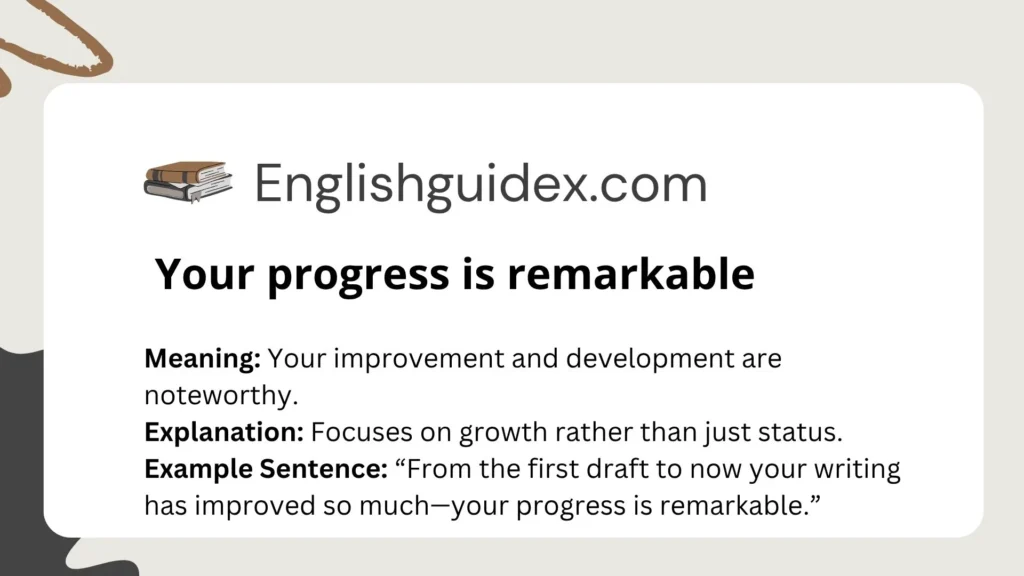
- Phrase: Your progress is remarkable
- Meaning: Your improvement and development are noteworthy.
- Explanation: Focuses on growth rather than just status.
- Example Sentence: “From the first draft to now your writing has improved so much—your progress is remarkable.”
- Best Use: Professional feedback, teaching/mentoring.
- Worst Use: When no visible progress has occurred yet.
- Tone: Professional / Encouraging
- Phrase: Continue the excellent work
- Meaning: Keep doing the excellent work you’ve been doing.
- Explanation: Formal version of “keep up the good work”.
- Example Sentence: “Given your high standard of service this quarter, please continue the excellent work.”
- Best Use: Formal business writing, management feedback.
- Worst Use: Informal chats—might sound overly stiff.
- Tone: Formal / Neutral
- Phrase: You’re raising the bar
- Meaning: Your performance is increasing the standard for others.
- Explanation: Indicates you’re not just doing well, you’re improving the expectations.
- Example Sentence: “With your innovative approach, you’re raising the bar for the whole team.”
- Best Use: Business or professional contexts where excellence is being set.
- Worst Use: When no new standard has yet been established.
- Tone: Professional / Affirmative
- Phrase: Keep pushing forward
- Meaning: Continue moving ahead, especially despite obstacles.
- Explanation: A bit more dynamic, implies effort and forward motion.
- Example Sentence: “We’re nearing the finish line of the project—let’s keep pushing forward.”
- Best Use: Business, project teams, informal.
- Worst Use: When someone is not in a push-phase but maintenance phase.
- Tone: Friendly / Motivational
- Phrase: Your commitment is unwavering
- Meaning: Your dedication remains strong and constant.
- Explanation: Praises consistent commitment over time.
- Example Sentence: “Even under pressure your commitment is unwavering—thank you.”
- Best Use: Formal, professional.
- Worst Use: For short-term tasks or new performers where commitment isn’t yet proven.
- Tone: Formal / Appreciative
- Phrase: Excellent job—keep it up
- Meaning: You did excellent work; please continue.
- Explanation: Straightforward, slightly informal but can fit many contexts.
- Example Sentence: “You completed the audit ahead of time—excellent job, keep it up.”
- Best Use: Business or informal.
- Worst Use: Ultra-formal contexts where more formal phrasing is expected (for example very formal speeches).
- Tone: Neutral / Friendly
- Phrase: Your work is setting a benchmark
- Meaning: Your performance is becoming the standard others will follow.
- Explanation: High praise; the person’s work becomes a reference point.
- Example Sentence: “Your report has become the template for others—your work is setting a benchmark.”
- Best Use: Professional feedback, leadership contexts.
- Worst Use: With someone who is new or not yet achieving standout performance.
- Tone: Formal / Very Positive
- Phrase: You’re doing a fantastic job—stay at it
- Meaning: You are doing very well—continue with the same effort.
- Explanation: Combines current praise with future encouragement.
- Example Sentence: “Since joining our marketing team you’ve been doing a fantastic job—stay at it.”
- Best Use: Informal/business mix.
- Worst Use: When you need to emphasise stronger or more formal point rather than stay informal.
- Tone: Friendly / Encouraging
- Phrase: You’ve gone above and beyond
- Meaning: You have done more than expected; continue the level of effort.
- Explanation: Highlights exceptional input and suggests sustaining it.
- Example Sentence: “Your client follow-up was outstanding—you’ve gone above and beyond.”
- Best Use: Business, formal appreciation.
- Worst Use: For very routine or small tasks where such praise might feel exaggerated.
- Tone: Formal / Strong praise
- Phrase: Keep smashing it
- Meaning: Continue doing outstanding work.
- Explanation: Very informal, energetic, common among younger or casual teams.
- Example Sentence: “Your development sprint was great—keep smashing it!”
- Best Use: Informal team chats, casual environment.
- Worst Use: Formal business emails, professional reports.
- Tone: Very friendly / Slang
Comparison Table
Here’s a quick table comparing some of the alternatives by tone and usage:
| Phrase | Tone | Best Use |
|---|---|---|
| You’re on the right track | Professional | Formal feedback / mentoring |
| Keep up the momentum | Motivational | Business / team performance |
| You’re on a roll | Casual & friendly | Informal team chat or casual praise |
| Maintain the high standards | Formal & serious | Business formal, leadership contexts |
| You’ve gone above and beyond | Formal & strong | Recognition of exceptional effort |
FAQs
Q1: Is it okay to say “keep up the good work” in an email?
Yes—it is perfectly fine. Just make sure it fits the tone of your email and you aren’t relying on it too often. Adding specific details about what you liked makes it stronger.
Q2: Can I use “keep up the good work” with friends?
Yes. With friends, you might use more informal alternatives (like “you’re on a roll” or “keep smashing it”) but the original phrase still works.
Q3: Does using different phrases make a difference?
Yes. Using varied phrases shows you’re paying attention, sounds more genuine, and keeps your writing/speaking fresh. It avoids repetition and helps your communication stand out.
Q4: Which alternative is best for a formal business report?
Phrases like “continue the excellent work,” “your efforts are paying off,” or “you’ve set the bar high” are suitable for formal business contexts.
Q5: What should I avoid when praising someone?
Avoid generic or over-used phrases with no specifics. Don’t use overly informal slang in a formal context. And avoid praising someone in a way that might set unrealistic expectations.
Conclusion
Varying your language when you praise someone—rather than always saying “keep up the good work”—can make a big difference in how your encouragement is received.
It helps you sound more confident, professional, and natural in English.
Whether you choose a formal alternative or a friendly one, pick a phrase that fits the context and the person you’re speaking to.
Try out the examples above and you’ll soon have a richer vocabulary of praise to draw from. Keep practising—and keep up the great work!

David Jonson is an experienced English language writer who specializes in clear, practical, and learner-friendly content. He helps students and professionals improve their communication skills with confidence.