The phrase “over the years” is very common in English. People use it to talk about change, growth, or experience that happens slowly across a long time.
You may hear it in offices, books, emails, speeches, and daily talk. But if you use the same phrase again and again, your English can sound boring or repetitive. That is why learning other ways to say “over the years” is important.
Using different words helps you sound more fluent and confident. It also helps you match the right tone for the right situation. Some phrases sound formal and professional, while others feel friendly and casual.
In this article, you will learn 22+ alternatives to “over the years”, with clear meanings and simple examples. These phrases will help you speak and write better English in both personal and professional settings.
What Does “Over the Years” Mean?
“Over the years” means during a long period of time, usually from the past until now. It shows that something happened slowly or many times, not all at once.
Grammar Note:
- It is an adverbial phrase.
- It often comes at the start or end of a sentence.
- It is commonly used with present perfect or past tense.
Example:
- Over the years, she has improved her English skills.
When to Use “Over the Years”
You can use “over the years” in many situations, such as:
- Formal writing: reports, essays, research papers
- Business English: presentations, emails, company profiles
- Casual speech: conversations with friends or family
- Storytelling: talking about life experiences
- Professional bios: resumes or LinkedIn summaries
It works well when you want to show progress, experience, or long-term change.
Is It Professional or Polite to Say “Over the Years”?
Yes, “over the years” is polite, neutral, and professional. It is safe to use in:
- Business emails
- Academic writing
- Workplace meetings
- Client communication
However, in formal writing, repeating it too often may sound weak. That is why learning formal ways to say “over the years” can make your English stronger and more polished.
Pros and Cons of Using “Over the Years”
Pros
- Easy to understand
- Natural and common
- Works in formal and informal English
- Clear time meaning
Cons
- Can sound repetitive
- Not very expressive
- Lacks strong emotion
- Overused in writing
22+ Other Ways to Say “Over the Years” (With Examples)
Below are 22+ synonyms for “over the years”, explained in a simple, learner-friendly way.
1. Over Time
Meaning: Gradually during a period
Explanation: A direct and very common alternative
Example Sentence: Over time, his confidence grew.
Best Use: Formal, Business, Casual
Worst Use: Very emotional writing
Tone: Neutral
2. Through the Years
Meaning: From past to present
Explanation: Very similar to “over the years”
Example Sentence: Through the years, the company expanded globally.
Best Use: Writing, Speeches
Worst Use: Short texts
Tone: Neutral
3. Over a Period of Time
Meaning: During a specific time span
Explanation: More formal and clear
Example Sentence: Over a period of time, skills improve with practice.
Best Use: Academic, Business
Worst Use: Casual chat
Tone: Formal
4. Throughout the Years
Meaning: During all those years
Explanation: Adds a sense of continuity
Example Sentence: She remained loyal throughout the years.
Best Use: Writing, Storytelling
Worst Use: Technical data
Tone: Neutral
5. As Time Went On
Meaning: Gradually in the future of the past
Explanation: Common in storytelling
Example Sentence: As time went on, they became closer.
Best Use: Informal, Stories
Worst Use: Reports
Tone: Friendly
6. With Time
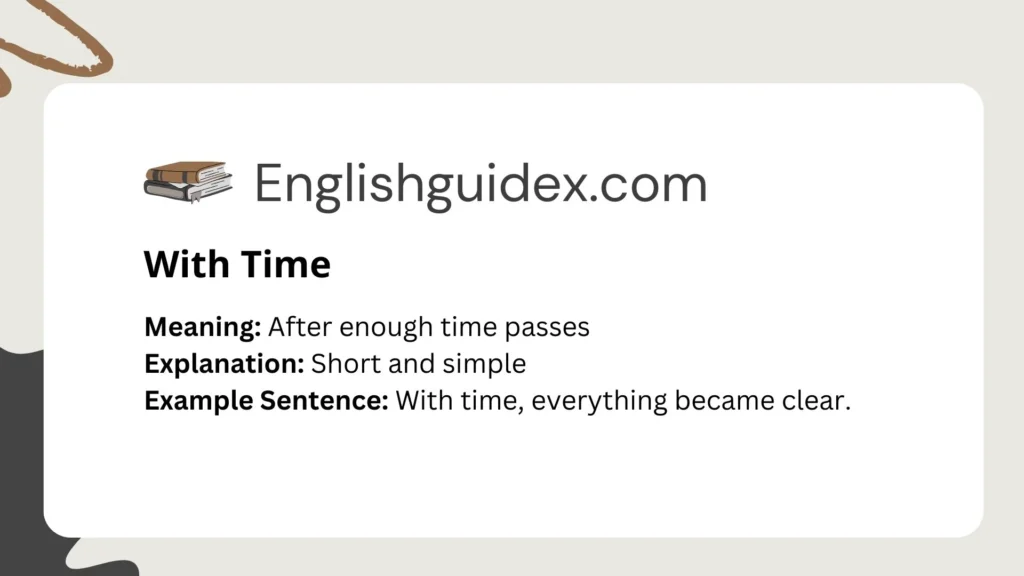
Meaning: After enough time passes
Explanation: Short and simple
Example Sentence: With time, everything became clear.
Best Use: Advice, Casual talk
Worst Use: Legal writing
Tone: Friendly
7. In the Long Run
Meaning: After a long period
Explanation: Focuses on final result
Example Sentence: In the long run, hard work pays off.
Best Use: Business, Advice
Worst Use: Short-term topics
Tone: Emphatic
8. Over the Course of Time
Meaning: Gradually during development
Explanation: Formal and structured
Example Sentence: Over the course of time, policies changed.
Best Use: Academic, Reports
Worst Use: Casual chat
Tone: Formal
9. Gradually
Meaning: Slowly, step by step
Explanation: Focuses on speed of change
Example Sentence: Gradually, she improved her skills.
Best Use: General English
Worst Use: Exact timelines
Tone: Neutral
10. As the Years Passed
Meaning: As time moved forward
Explanation: Common in narratives
Example Sentence: As the years passed, the town grew.
Best Use: Writing, Stories
Worst Use: Emails
Tone: Warm
11. Over Many Years
Meaning: Across a long time
Explanation: Clear and direct
Example Sentence: Over many years, trust was built.
Best Use: Formal writing
Worst Use: Casual speech
Tone: Neutral
12. Across the Years
Meaning: Spanning many years
Explanation: Slightly poetic
Example Sentence: Across the years, traditions stayed alive.
Best Use: Writing
Worst Use: Technical documents
Tone: Gentle
13. Over an Extended Period
Meaning: During a long duration
Explanation: Very professional
Example Sentence: Over an extended period, results improved.
Best Use: Business, Research
Worst Use: Friendly chat
Tone: Formal
14. Over the Long Term
Meaning: For future and past effects
Explanation: Common in business
Example Sentence: Over the long term, costs will decrease.
Best Use: Finance, Strategy
Worst Use: Personal stories
Tone: Professional
15. In Time
Meaning: Eventually
Explanation: Focus on result, not process
Example Sentence: In time, he understood the lesson.
Best Use: Casual, Advice
Worst Use: Data reports
Tone: Friendly
16. As Time Passed
Meaning: As events continued
Explanation: Similar to storytelling style
Example Sentence: As time passed, things improved.
Best Use: Informal writing
Worst Use: Business emails
Tone: Soft
17. During the Years
Meaning: Within a time frame
Explanation: Simple but less common
Example Sentence: During the years, many changes occurred.
Best Use: Writing
Worst Use: Speaking
Tone: Neutral
18. Over the Decades
Meaning: Across many decades
Explanation: Strong sense of long time
Example Sentence: Over the decades, technology evolved.
Best Use: History, Articles
Worst Use: Short time topics
Tone: Formal
19. Little by Little
Meaning: Slowly, in small steps
Explanation: Very informal and expressive
Example Sentence: Little by little, she gained confidence.
Best Use: Casual talk
Worst Use: Academic writing
Tone: Friendly
20. Step by Step
Meaning: Gradual progress
Explanation: Focus on process
Example Sentence: Step by step, the plan worked.
Best Use: Motivation
Worst Use: Formal reports
Tone: Encouraging
21. Over Time, Gradually
Meaning: Emphasizes slow change
Explanation: Adds clarity
Example Sentence: Over time, gradually, habits formed.
Best Use: Teaching
Worst Use: Short texts
Tone: Neutral
22. With the Passage of Time
Meaning: As time moves forward
Explanation: Formal and elegant
Example Sentence: With the passage of time, priorities changed.
Best Use: Writing, Essays
Worst Use: Casual chat
Tone: Formal
23. Over the Years Gone By
Meaning: Past years until now
Explanation: Slightly poetic
Example Sentence: Over the years gone by, she learned a lot.
Best Use: Storytelling
Worst Use: Business writing
Tone: Reflective
Comparison Table: Top Alternatives
| Phrase | Tone | Best For |
|---|---|---|
| Over time | Neutral | All contexts |
| In the long run | Emphatic | Business, advice |
| As time went on | Friendly | Stories |
| Over an extended period | Formal | Reports |
| Little by little | Casual | Speaking |
| With the passage of time | Formal | Essays |
FAQs
1. Is “over the years” formal English?
Yes, it is neutral and works in both formal and informal English.
2. What is the best formal alternative to “over the years”?
“Over an extended period” or “with the passage of time.”
3. Can I use these phrases in business emails?
Yes, choose formal ones like “over time” or “over the long term.”
4. Are these phrases good for IELTS or TOEFL?
Yes, they help improve vocabulary range.
5. Which phrase is best for casual speaking?
“As time went on” or “little by little.”
Conclusion
Learning other ways to say “over the years” can greatly improve your English. It helps you avoid repetition and sound more natural. Different phrases create different tones, from professional to friendly.
By choosing the right alternative, you can express ideas clearly and confidently. Try using these expressions in your writing and speaking. With practice, your English will feel smoother, richer, and more advanced over time.

David Jonson is an experienced English language writer who specializes in clear, practical, and learner-friendly content. He helps students and professionals improve their communication skills with confidence.