Last updated on December 2nd, 2025 at 04:31 pm
When you say “Talk to you soon”, it usually signals that you plan to communicate again shortly. This simple phrase works in texts, calls, or emails, but English offers many alternatives to make your conversation sound natural, polished, or professional.
Using different phrases is important because tone and context can change the meaning of your message. A casual “Talk to you soon” might be perfect with a friend but too informal in a business email.
By learning other ways to say “Talk to you soon”, you can choose expressions that match formal, casual, or professional situations. This guide provides 28+ alternatives with meanings, examples, and usage tips for every context.
What Does “Talk to You Soon” Mean?
Definition: “Talk to you soon” is a friendly expression indicating that you will communicate again in the near future.
Grammar Note:
- It is a short, informal sentence.
- “Talk” is the verb, “to you” is the indirect object, and “soon” indicates time.
- It can often be replaced with phrases like “see you soon” or “catch up later” depending on context.
When to Use “Talk to You Soon”
- Informal spoken English: Ending a phone call with a friend.
- Text messages: Casual chats.
- Emails: Friendly, semi-professional closings.
Tip: Avoid using it in formal reports or letters; choose professional alternatives instead.
Is It Professional/Polite to Say “Talk to You Soon”?
- Politeness: Warm and friendly.
- Corporate suitability: Fine for internal emails, client follow-ups, or casual business chats.
- Tone: Informal; for formal emails, alternatives like “Looking forward to speaking with you” work better.
Pros and Cons of Using “Talk to You Soon”
Pros:
- Friendly and approachable tone
- Short and easy to use
- Works in both spoken and written contexts
Cons:
- Too informal for highly professional settings
- Can feel repetitive if overused
- Vague about exact timing of the next conversation
28+ Alternative Ways to Say “Talk to You Soon”
Here are practical alternatives with meaning, nuance, examples, and usage tips:
1. Speak with you shortly
- Meaning: Will talk soon
- Explanation: Slightly formal
- Example: I’ll speak with you shortly about the project updates.
- Best Use: Business / Formal
- Worst Use: Casual texting
- Tone: Formal
2. Catch you later
- Meaning: Talk or see you later
- Explanation: Informal, friendly
- Example: Thanks for your help! Catch you later.
- Best Use: Informal / Casual
- Worst Use: Professional emails
- Tone: Friendly
3. Chat soon
- Meaning: Will have a conversation soon
- Explanation: Casual, often in texts
- Example: Got your message. Chat soon!
- Best Use: Informal
- Worst Use: Formal letters
- Tone: Friendly
4. Talk soon
- Meaning: Same as original
- Explanation: Shorter, casual
- Example: It was great catching up. Talk soon!
- Best Use: Informal / Friendly emails
- Worst Use: Formal business contexts
- Tone: Friendly
5. Speak soon
- Meaning: Will speak in the near future
- Explanation: Neutral, professional-friendly
- Example: Thanks for your input. Speak soon.
- Best Use: Business / Casual
- Worst Use: Formal letters
- Tone: Neutral
6. Talk to you later
- Meaning: Converse later
- Explanation: Casual, common in American English
- Example: Gotta go now, talk to you later.
- Best Use: Casual / Friendly
- Worst Use: Business letters
- Tone: Friendly
7. I’ll be in touch
- Meaning: Will contact you again
- Explanation: Formal, polite
- Example: I’ll be in touch with the updated report by Friday.
- Best Use: Business / Formal
- Worst Use: Casual texting
- Tone: Formal
8. Until next time
- Meaning: Until we talk again
- Explanation: Polite, slightly old-fashioned
- Example: Thank you for your guidance. Until next time.
- Best Use: Formal / Neutral
- Worst Use: Quick casual chats
- Tone: Formal / Friendly
9. Speak with you soon
- Meaning: Will converse shortly
- Explanation: Polite, slightly formal
- Example: I’ll review the documents and speak with you soon.
- Best Use: Business / Professional
- Worst Use: Casual texting
- Tone: Formal
10. Catch up soon
- Meaning: Talk and update each other soon
- Explanation: Informal, friendly
- Example: Let’s grab coffee and catch up soon!
- Best Use: Casual / Friendly
- Worst Use: Corporate emails
- Tone: Friendly
11. I’ll reach out soon
- Meaning: Contact you shortly
- Explanation: Formal, proactive
- Example: I’ll reach out soon with the revised plan.
- Best Use: Business / Formal
- Worst Use: Casual conversations
- Tone: Formal
12. Talk with you later
- Meaning: Converse at a later time
- Explanation: Casual, American English
- Example: I have to leave now. Talk with you later.
- Best Use: Informal
- Worst Use: Business letters
- Tone: Friendly
13. I’ll get back to you soon
- Meaning: Reply or communicate soon
- Explanation: Professional email phrase
- Example: I’ll get back to you soon with the final figures.
- Best Use: Business / Formal
- Worst Use: Casual texting
- Tone: Formal
14. Looking forward to speaking with you
- Meaning: Anticipating the next conversation
- Explanation: Polite and professional
- Example: Looking forward to speaking with you during tomorrow’s meeting.
- Best Use: Formal / Business
- Worst Use: Casual chats
- Tone: Formal / Polite
15. Speak to you shortly
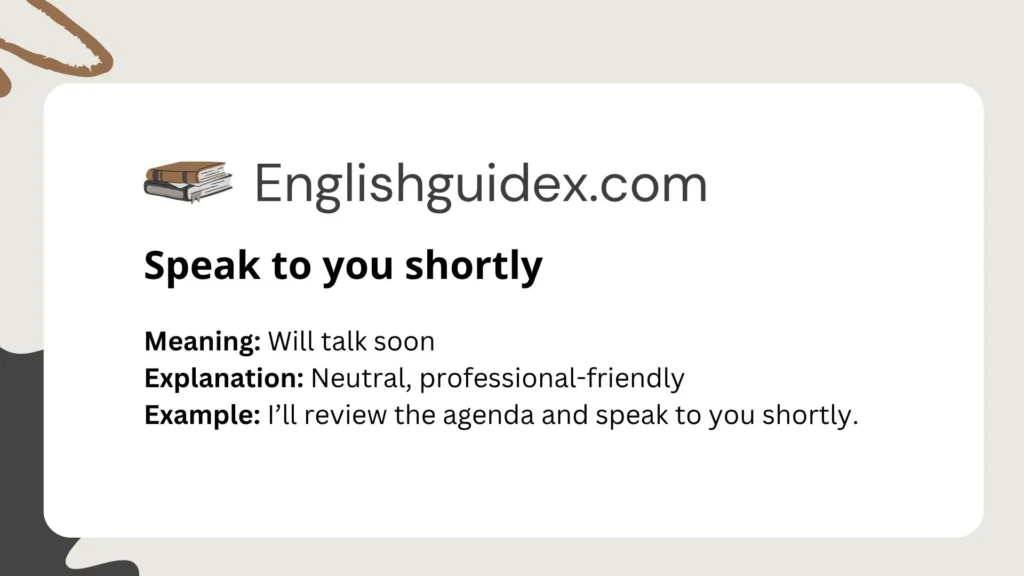
- Meaning: Will talk soon
- Explanation: Neutral, professional-friendly
- Example: I’ll review the agenda and speak to you shortly.
- Best Use: Business / Casual
- Worst Use: Informal texting
- Tone: Neutral
16. Till we talk again
- Meaning: Until the next conversation
- Explanation: Slightly poetic, works well in writing
- Example: Till we talk again, take care!
- Best Use: Formal / Friendly
- Worst Use: Very casual chats
- Tone: Friendly / Polite
17. We’ll touch base soon
- Meaning: Will reconnect or discuss shortly
- Explanation: Corporate phrase
- Example: Let’s review the project and we’ll touch base soon.
- Best Use: Business / Professional
- Worst Use: Casual texting
- Tone: Formal / Neutral
18. Until we speak again
- Meaning: Until the next conversation
- Explanation: Polite, professional
- Example: Thank you for your time. Until we speak again.
- Best Use: Business / Formal
- Worst Use: Casual texting
- Tone: Formal / Polite
19. Talk to you in a bit
- Meaning: Will talk soon
- Explanation: Casual, friendly
- Example: I’ll finish this task and talk to you in a bit.
- Best Use: Informal
- Worst Use: Business letters
- Tone: Friendly
20. Catch you in a while
- Meaning: Speak later
- Explanation: Informal, friendly
- Example: I’m heading out now. Catch you in a while.
- Best Use: Casual / Friendly
- Worst Use: Professional emails
- Tone: Friendly
21. I’ll be back in touch soon
- Meaning: Will contact shortly
- Explanation: Formal email phrase
- Example: I’ll be back in touch soon with the revised schedule.
- Best Use: Business / Formal
- Worst Use: Casual texting
- Tone: Formal
22. Talk again soon
- Meaning: Will speak again soon
- Explanation: Friendly and casual
- Example: It was nice catching up. Talk again soon!
- Best Use: Informal / Friendly
- Worst Use: Formal emails
- Tone: Friendly
23. Speak with you later
- Meaning: Will converse later
- Explanation: Neutral, can be used semi-formally
- Example: I’ll review your notes and speak with you later.
- Best Use: Business / Casual
- Worst Use: Very formal letters
- Tone: Neutral
24. Looking forward to our chat
- Meaning: Excited about upcoming conversation
- Explanation: Polite and positive
- Example: Looking forward to our chat tomorrow!
- Best Use: Professional / Friendly
- Worst Use: Very casual texts
- Tone: Polite / Friendly
25. Until our next conversation
- Meaning: Until we speak again
- Explanation: Formal, suitable in letters and emails
- Example: Until our next conversation, take care.
- Best Use: Formal / Business
- Worst Use: Casual chats
- Tone: Formal / Polite
26. I’ll talk to you soon
- Meaning: Will communicate shortly
- Explanation: Polite, slightly more formal than casual “talk soon”
- Example: I’ll talk to you soon once I finalize the details.
- Best Use: Business / Friendly
- Worst Use: Extremely casual texting
- Tone: Neutral / Polite
27. Till next time
- Meaning: Until we meet or speak again
- Explanation: Friendly, casual closing
- Example: It’s been great chatting. Till next time!
- Best Use: Informal / Friendly
- Worst Use: Very formal emails
- Tone: Friendly
28. I’ll check in with you soon
- Meaning: Will communicate shortly
- Explanation: Common in business and professional settings
- Example: I’ll check in with you soon to discuss the report.
- Best Use: Business / Formal
- Worst Use: Casual texting
- Tone: Formal
Comparison Table of Top 7 Alternatives
| Phrase | Tone | Formality | Best Context |
|---|---|---|---|
| Speak with you shortly | Neutral | Formal | Business emails |
| Catch you later | Friendly | Informal | Friends, chats |
| I’ll be in touch | Formal | Formal | Corporate emails |
| Chat soon | Friendly | Informal | Texting, friends |
| Looking forward to speaking | Polite | Formal | Meetings, emails |
| We’ll touch base soon | Neutral | Business Formal | Workplace |
| Talk to you in a bit | Friendly | Informal | Friends, casual |
FAQs
Q1: Can I use “Talk to you soon” in emails?
Yes, it works well in friendly or semi-professional emails. For highly formal emails, use “Looking forward to speaking with you.”
Q2: Is “Catch you later” professional?
No, it’s casual and best used with friends or colleagues you know well.
Q3: How do I sound more professional?
Use phrases like “I’ll be in touch soon” or “Looking forward to speaking with you.”
Q4: Can I use these phrases in text messages?
Absolutely! Most casual alternatives like “Chat soon” or “Talk to you later” are perfect for texting.
Conclusion
Knowing 28+ other ways to say “Talk to you soon” helps you communicate more naturally and professionally in English.
Different phrases allow you to adjust your tone, making you sound friendly, polite, or formal depending on the situation. Using a variety of expressions avoids repetition, improves clarity, and demonstrates social awareness.
Whether in emails, texts, or calls, choosing the right phrase ensures smooth and confident communication. Keep this guide handy, and you’ll always find the perfect way to sign off a conversation.

David Jonson is an experienced English language writer who specializes in clear, practical, and learner-friendly content. He helps students and professionals improve their communication skills with confidence.