The phrase “Why do you ask?” is common in English conversations. People use it when they want to understand the reason behind a question. It can sound curious, careful, or sometimes even defensive, depending on how it is said.
For English learners and professionals, knowing other ways to say “Why do you ask?” is very useful. Different situations need different tones. A casual chat with friends is not the same as a business meeting or a formal email.
The right words can make you sound polite, confident, and professional. This article will teach you synonyms for “Why do you ask?”, explain when to use them, and show examples in real English. By the end, you will feel more natural and fluent in many situations.
What Does “Why Do You Ask?” Mean?
“Why do you ask?” means you want to know the reason behind someone’s question.
You are not answering the question yet. Instead, you are asking for more information.
Grammar Note
- It is a question.
- It uses simple present tense.
- Subject: you
- Verb: ask
Example:
“Why do you ask about my schedule?”
When to Use “Why Do You Ask?”
You can use this phrase in many situations:
Informal Use
- Talking to friends or family
- Casual chats
- Friendly curiosity
Formal Use
- Work conversations
- Meetings
- Interviews (with care)
Written Use
- Emails
- Messages
- Online chats
Spoken Use
- Phone calls
- Face-to-face conversations
Is It Professional or Polite to Say “Why Do You Ask?”
Yes, it can be polite and professional, but tone matters.
- Said calmly → sounds curious
- Said sharply → sounds defensive
In business, it is better to use formal alternatives to “Why do you ask?” to avoid sounding rude or suspicious.
Pros and Cons of Using “Why Do You Ask?”
Pros
- Simple and clear
- Easy to understand
- Useful in many situations
Cons
- Can sound defensive
- May feel rude in formal settings
- Not always polite in emails
22+ Other Ways to Say “Why Do You Ask?” (With Examples)
1. Phrase: What makes you ask?
Meaning: What caused your question?
Explanation: Sounds friendly and curious.
Example Sentence: What makes you ask about the deadline?
Best Use: Casual, work-friendly
Worst Use: Very formal writing
Tone: Friendly
2. Phrase: May I ask why?
Meaning: Asking politely for the reason.
Explanation: Very polite and respectful.
Example Sentence: May I ask why you need this information?
Best Use: Business, formal
Worst Use: Casual chats
Tone: Formal
3. Phrase: Is there a reason you’re asking?
Meaning: Checking the purpose of the question.
Explanation: Neutral and professional.
Example Sentence: Is there a reason you’re asking about my role?
Best Use: Work, interviews
Worst Use: Friendly jokes
Tone: Neutral
4. Phrase: Can you tell me why you’re asking?
Meaning: Requesting explanation.
Explanation: Clear and polite.
Example Sentence: Can you tell me why you’re asking about the budget?
Best Use: Business, emails
Worst Use: Very casual talk
Tone: Professional
5. Phrase: I’m curious—why do you ask?
Meaning: Shows gentle curiosity.
Explanation: Softens the question.
Example Sentence: I’m curious—why do you ask about my plans?
Best Use: Casual, semi-formal
Worst Use: Serious negotiations
Tone: Friendly
6. Phrase: What’s behind the question?
Meaning: What is the reason?
Explanation: Direct but not rude.
Example Sentence: What’s behind the question about the project?
Best Use: Work discussions
Worst Use: Sensitive topics
Tone: Neutral
7. Phrase: Is something specific you’d like to know?
Meaning: Asking for clarity.
Explanation: Helpful and polite.
Example Sentence: Is there something specific you’d like to know?
Best Use: Customer service
Worst Use: Casual talk
Tone: Professional
8. Phrase: What prompted that question?
Meaning: What caused you to ask?
Explanation: Slightly formal and thoughtful.
Example Sentence: What prompted that question about my experience?
Best Use: Interviews
Worst Use: Informal chats
Tone: Formal
9. Phrase: Can I ask what you’re getting at?
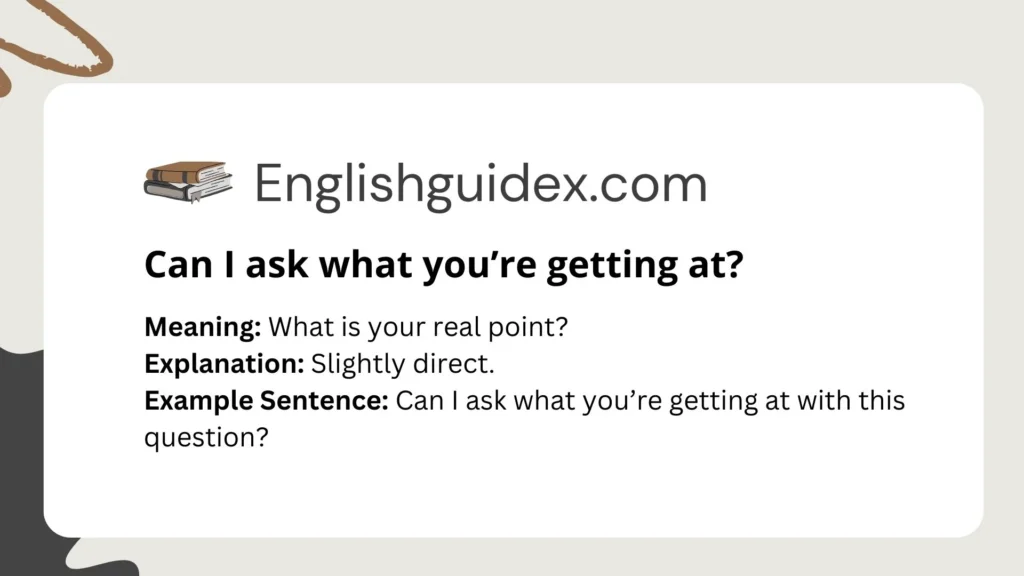
Meaning: What is your real point?
Explanation: Slightly direct.
Example Sentence: Can I ask what you’re getting at with this question?
Best Use: Casual discussions
Worst Use: Formal emails
Tone: Casual
10. Phrase: Is there something I should be aware of?
Meaning: Checking for hidden concern.
Explanation: Useful in work settings.
Example Sentence: Is there something I should be aware of regarding this?
Best Use: Business
Worst Use: Friendly chats
Tone: Professional
11. Phrase: What’s the context for your question?
Meaning: Asking for background.
Explanation: Very professional.
Example Sentence: What’s the context for your question?
Best Use: Meetings
Worst Use: Casual talk
Tone: Formal
12. Phrase: Are you asking for a specific reason?
Meaning: Clarifying intent.
Explanation: Neutral and clear.
Example Sentence: Are you asking for a specific reason?
Best Use: Work
Worst Use: Personal chats
Tone: Neutral
13. Phrase: Do you mind sharing why?
Meaning: Polite request.
Explanation: Soft and friendly.
Example Sentence: Do you mind sharing why you’re asking?
Best Use: Business, polite talk
Worst Use: Urgent situations
Tone: Polite
14. Phrase: What information are you looking for?
Meaning: Asking for details.
Explanation: Helpful tone.
Example Sentence: What information are you looking for exactly?
Best Use: Customer support
Worst Use: Casual curiosity
Tone: Professional
15. Phrase: Could you explain your question a bit more?
Meaning: Asking for clarity.
Explanation: Very polite.
Example Sentence: Could you explain your question a bit more?
Best Use: Formal conversations
Worst Use: Informal chats
Tone: Formal
16. Phrase: Is there a particular concern?
Meaning: Checking for worry.
Explanation: Good for work issues.
Example Sentence: Is there a particular concern you have?
Best Use: Business
Worst Use: Casual talks
Tone: Professional
17. Phrase: What led you to ask that?
Meaning: Reason behind the question.
Explanation: Friendly and curious.
Example Sentence: What led you to ask that?
Best Use: Casual or work
Worst Use: Serious emails
Tone: Friendly
18. Phrase: May I know the reason?
Meaning: Very polite inquiry.
Explanation: Simple and formal.
Example Sentence: May I know the reason for your question?
Best Use: Business emails
Worst Use: Casual talk
Tone: Formal
19. Phrase: What’s your main concern?
Meaning: Asking about the real issue.
Explanation: Direct and professional.
Example Sentence: What’s your main concern here?
Best Use: Meetings
Worst Use: Friendly chats
Tone: Neutral
20. Phrase: Can you help me understand why?
Meaning: Polite clarification.
Explanation: Sounds cooperative.
Example Sentence: Can you help me understand why you’re asking?
Best Use: Work, emails
Worst Use: Casual jokes
Tone: Polite
21. Phrase: What’s the purpose of your question?
Meaning: Asking about intent.
Explanation: Very formal and clear.
Example Sentence: What’s the purpose of your question?
Best Use: Professional settings
Worst Use: Friendly chats
Tone: Formal
22. Phrase: Is there something specific behind this?
Meaning: Asking about hidden reason.
Explanation: Neutral and careful.
Example Sentence: Is there something specific behind this question?
Best Use: Business
Worst Use: Casual talk
Tone: Neutral
23. Phrase: What’s driving your question?
Meaning: What motivates the question?
Explanation: Modern and professional.
Example Sentence: What’s driving your question about the report?
Best Use: Work meetings
Worst Use: Informal chats
Tone: Professional
Comparison Table: Top Alternatives
| Phrase | Tone | Best Use |
|---|---|---|
| What makes you ask? | Friendly | Casual & Work |
| May I ask why? | Formal | Business |
| Do you mind sharing why? | Polite | Emails |
| What prompted that question? | Formal | Interviews |
| Can you help me understand why? | Polite | Professional |
FAQs
1. Is “Why do you ask?” rude?
No, but tone matters. It can sound rude if said sharply.
2. What is the most polite alternative?
“May I ask why?” is very polite.
3. What is the best business alternative?
“Can you tell me why you’re asking?”
4. Can I use these in emails?
Yes. Choose formal ones for work emails.
Conclusion
Learning other ways to say “Why do you ask?” helps you sound more natural and confident in English.
Each alternative has a different tone, from friendly to very formal. Choosing the right phrase shows good communication skills, especially at work.
Try using different options in conversations, emails, and meetings. With practice, you will express curiosity politely and professionally every time.

David Jonson is an experienced English language writer who specializes in clear, practical, and learner-friendly content. He helps students and professionals improve their communication skills with confidence.