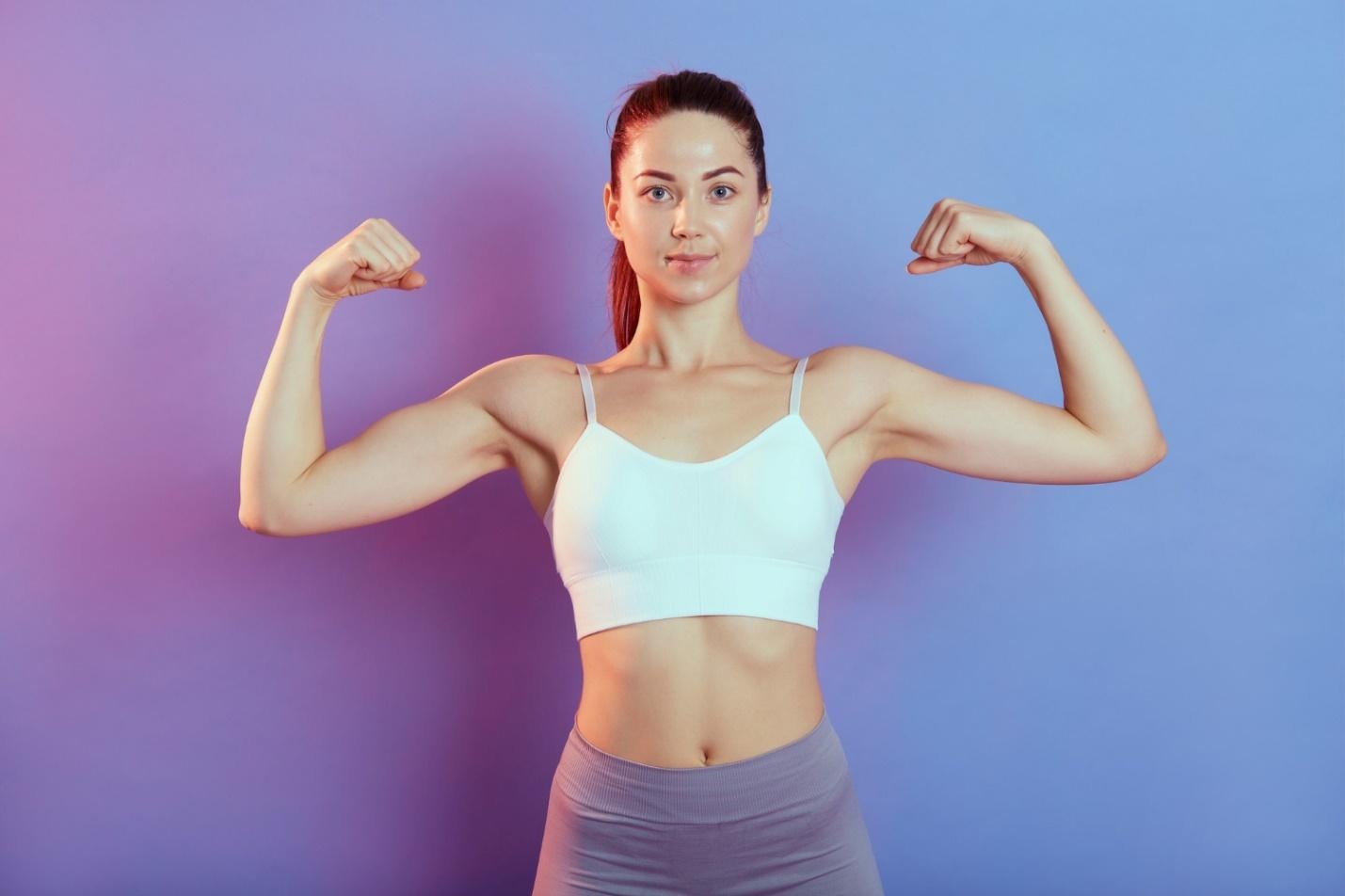
Some women prefer to avoid weightlifting because they fear it might make them look too bulky.
But this myth is now fading as more and more women are strategically lifting weights to improve strength, balance, and well-being.
Scroll down to bust more myths about weightlifting for women and know how you can gain muscle safely and effectively with resistance training.
Busting Weightlifting Myths for Women
Often, the world of women’s fitness is marred by misconceptions that deter women from incorporating resistance training into their routines or from chasing unrealistic goals. Check the common ones below:
- Women Should Lift Lighter Weights
Women think that heavy weights will make their upper bodies manly, because they build muscle mass. But that’s easier said than done. Actually, women take significantly longer than men to build muscles due to low testosterone levels.
Instead, lifting weights can help women achieve a toned appearance by melting fat and promoting lean muscle mass.
- Weightlifting is Only for Aesthetics
This one’s common for all. While many lift weights with aesthetic goals in mind, like losing weight or sculpting their bodies, the benefits go beyond appearance. Lifting weights or resistance training plays a crucial role in building functional muscle strength and improving mental health.
Also, fitness-inclined people tend to have a more nutritious diet, including peanut butter, protein shakes, unprocessed foods, and other low-fat and high-protein foods that help reduce cholesterol levels, boost metabolic function, and cut risks of health issues.
- You Can Spot Reduce Fat with Lifting
You can’t lose fat from specific body areas with targeted exercises. It’s not even supported by science. Weight loss is an overall process and is most effectively achieved with full-body workouts, cardio, and, most importantly, balanced nutrition.
Weighted Exercises for Women
When you start working out, you need to decide how much time you’ll be dedicating to the exercise. On an average, 3 to 5 times a week is ideal for proper rest, recovery, and growth.
Here’s a simple strategy:
- 3 times per week: 1 day for full-body, 1 day for upper body, and 1 day for upper body
- 4 times per week: 2 days for lower body and 2 days upper body workouts
Try these workouts for different body parts with added weights or with your own weights:
1. Lower body and core
You can start with a little warm-up session for 10 to 15 minutes. Try light exercises like cardio, dynamic mobility, and a few controlled lower-body activation.
Then do the following workouts with slow tempo and controlled movement. There’s no need for training till failure.
- Dumbbell step up
- Leg press
- Dumbbell goblet squat
- Weighted crunches
- 45 Degree Leg Press Calf Raise
2. Upper body
For upper body workout target back, shoulders, chest and arms with a mix of pulling and pushing movements. Do these:
- Pull up or lay down
- Seated cable row
- Tricep
- Dumbbell tricep extension
- Hanging leg raise
Nutrition and Recovery for Optimal Muscle Growth
Progress in muscle growth and recovery happens when you take proper rest and nutrition. Ensure adequate calorie intake and sufficient protein to build muscle strength and size.
And yes, make sure that you are consuming surplus calories to support muscle mass gains. The foods that will help you are eggs, lentils, protein bars, whole grains, protein shakes, chicken, yogurt, nuts and seeds, etc.
Along with these, take adequate sleep as muscle repair and growth happens when you sleep well.
Will this also Help with Weight Loss?
Although this whole guide is designed to support muscle growth, this can also be used by women to promote fat-loss.
Just focus on adjusting your calorie while still upping your protein intake in order to preserve muscle mass. Also, train consistently.
To Sum Up
There are a lot of myths revolving about weightlifting and strength training for women. In truth, these weighted exercises help you become stronger, healthier, lose weight, and more confident in your body.
To reap the maximum benefits, you need to focus on proper nutrition as well. Consume foods that are protein-packed and contain healthy fats and carbs for energy and growth.
