Last updated on March 30th, 2026 at 09:20 am
Yoga is a powerful practice for achieving balance, harmony, and integration of the body, mind, and spirit. However, beneath every perfect pose, every perfect balance, and every perfect alignment lies the subtle support of these fundamental tools, namely, the yoga mat. and the yoga blocks. While these tools are often taken for granted, they are, in reality, the unsung heroes of a successful, effective, and efficient yoga practice. This article will discuss the unique functions of the yoga mat and the blocks, as well as how these tools work in tandem with each other for an enhanced and enriched yoga experience.
The Yoga Mat: Your Personal Sanctuary
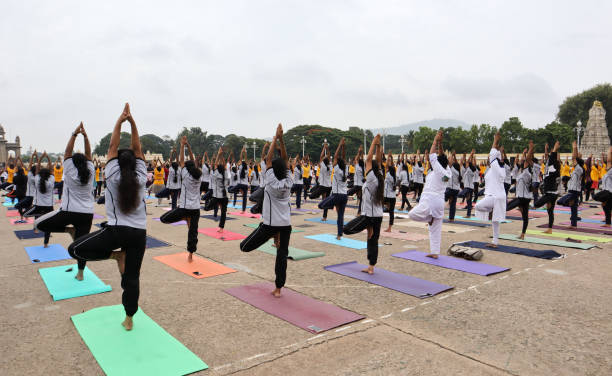
The yoga mat is more than just a piece of equipment or gear; it is the sacred ground on which the yoga journey takes place. It is the very definition of the space in which the yoga practice occurs.
Functionality and Features of Yoga Mats
Functionality and features of yoga mats can be considered as follows:
Grip and Stability: The yoga mat should provide a non-slip surface that can support the yogi by preventing the hands and feet from sliding or moving about on the surface of the mat, even when the yogi is performing vigorous yoga postures or routines.
Cushioning and Comfort: The yoga mat can vary in terms of its cushioning or comfort level; the mats are usually between 3mm and 6mm thick.
Portability and Durability: Portability is also one of the key features of yoga mats; the mats should be light enough to be rolled or folded and carried by the yogi.
Material Choice: The yoga mats can be made from different materials such as synthetic materials like PVC or natural products such as natural rubber or even cork.
Psychological Impact of the Yoga Mat
The act of placing your feet on your yoga mat represents a mental shift away from the outside world and into a meditative state. The yoga mat represents a personal space that is free from all distractions, promoting self-discovery.
Yoga Blocks: The Versatile Support System
Yoga blocks are small, lightweight blocks that are typically constructed out of foam, cork, or wood. These blocks are meant to assist with proper alignment, stretching, and balance. The blocks are simple but represent one of the most flexible and effective tools available.
Key Benefits of Using Yoga Blocks
Accessibility: The blocks enable users to get closer to the floor, especially when performing various stretches. For example, when performing a standing forward fold, one can place their hands on the blocks to avoid stretching beyond their limits, thereby preserving their integrity.
Alignment and Safety: The blocks enable users to align themselves correctly by providing tactile feedback. For example, when performing Triangle Pose, one can use a block under their lower hand to ensure that they stretch correctly without slouching.
Balance and Stability: The blocks provide users with balance, especially when performing balancing poses like Half Moon Pose. The blocks ensure balance by providing more points of contact with the floor.
Deepening One’s Yoga Practice
The blocks are essential for advanced users, as they enable one to stretch more deeply, especially when performing various stretches. The blocks can also be used by advanced users to perform more advanced poses, especially when performing restorative yoga.
The Synergy Between Yoga Mats and Yoga Blocks
The two tools are essential, as they complement each other when used in tandem.
The stability of the mat, along with the comfort of the grip, makes it an ideal combination for practicing yoga. The blocks, on the other hand, provide structural stability, allowing the practitioner to get into different poses without the fear of falling. Blocks placed on the mat during balance poses ensure maximum grip and stability.
Increasing the Range of Motion
Yoga blocks placed on the mat help the practitioner increase their range of motion without compromising their comfort level. Yoga beginners may find it difficult to touch the ground during certain poses, which may cause them to stretch their muscles beyond their comfort level.
Supporting Restorative Yoga
Blocks and yoga mats complement each other during restorative yoga, as they help the practitioner get into relaxing postures. Using blocks as bolsters while lying on the mat helps the practitioner get into relaxing postures, which is essential during therapeutic yoga, as it helps the practitioner get away from the stresses of their daily lives.
Choosing the Right Yoga Mat and Blocks for You
The right choice of mat and blocks for you depends on your style, needs, and beliefs as a yogi or yogini.
For Yoga Mats
For Beginners:
Choose mats that are moderately thick (4-5 mm) and have a great grip.
For Advanced Practitioners:
Choose thinner mats for better connection with the ground.
Eco-Friendly:
Choose natural rubber or cork mats for their eco-friendliness.
For portability:
Choose lightweight mats with a carrying strap, especially for travelers.
For Yoga Blocks
Material Preferences: Foam blocks are great for beginners, while cork blocks are great for advanced yogis. Wooden blocks are heavy and not so forgiving.
Size and Shape: Standard blocks are probably all that most people need. However, thinner and different shapes can be nice.
Texture and Grip: Non-slip surfaces are important so that blocks don’t move around during practice.
Maintaining Your Yoga Equipment
The care and longevity of your yoga mats and blocks are important. Here are some tips on how to properly care for them.
Yoga Mats: Mats should be cleaned regularly with soap and water or special sprays. They should not be exposed to harsh chemicals that can damage them. Mats should be completely dry before rolling them up.
Yoga Blocks: Foam blocks can be cleaned with a damp cloth, while cork blocks are cleaned gently and dried. Wooden blocks are oiled periodically.
For Yoga Blocks
Material Preferences: Foam blocks are great for beginners, while cork blocks are great for advanced yogis. Wooden blocks are heavy and not so forgiving.
Size and Shape: Standard blocks are probably all that most people need. However, thinner and different shapes can be nice.
Texture and Grip: Non-slip surfaces are important so that blocks don’t move around during practice.
Maintaining Your Yoga Equipment
The care and longevity of your yoga mats and blocks are important. Here are some tips on how to properly care for them.
Yoga Mats: Mats should be cleaned regularly with soap and water or special sprays. They should not be exposed to harsh chemicals that can damage them. Mats should be completely dry before rolling them up.
Yoga Blocks: Foam blocks can be cleaned with a damp cloth, while cork blocks are cleaned gently and dried. Wooden blocks are oiled periodically.
Final Thoughts: Investing in Your Practice
Yoga mats and blocks are not merely props; they are essential allies in one’s practice. Their judicious use is essential in ensuring a safe, accessible, and beneficial practice that allows one to fully benefit from yoga’s potential. Thus, whether one is beginning their yoga practice or is already an established yogi, yoga mats and blocks are essential in providing the support and security one needs to fully benefit from their practice. They provide the support one needs to stand firmly on one’s feet, reach deeper and further, and breathe more comfortably. In the dance of yoga, yoga mats and blocks provide the rhythm that steadies the feet, calms the mind, and opens the heart. They are essential allies in one’s yoga practice that can greatly benefit one’s practice and journey towards inner peace and harmony.
Read More: Simple Steps to Better Health: A Guide to Sustainable Wellness
